On Jupiter, Cold Air Rises?

In last week’s edition of Sciency Words, we covered the belts and zones of Jupiter’s atmosphere. As a brief summary:

  • Zones are the light colored stripes.
  • Belts are the darker, ruddy orange stripes.

While researching that post, something struck me as odd. The cooler clouds of zones rise above the warmer clouds of belts. That made no sense to me. Cold air rises? Warm air sinks? Isn’t that the opposite of what’s supposed to happen?

But there’s more to these clouds than temperature alone. We also have to consider air pressure.

Just as increasing the pressure of a gas can make it hotter, decreasing the pressure can make it cooler. So rather than picturing cool air masses somehow rising, picture rising air masses cooling off due to decreasing atmospheric pressure. Such a situation can be thermodynamically stable, especially when dealing with the extreme altitudes associated with planetary atmospheres.

Still sound crazy? Well, this phenomenon isn’t unique to Jupiter. Similar changes in air pressure occur here on Earth, which is why mountaintops get so cold while the fields and valleys below stay warm.

In many ways, Jupiter is a mysterious planet. We don’t fully understand what causes its enormous cyclonic and anticyclonic storms, nor do we fully understand what’s going on in the deeper layers of the planet’s interior. We’re not even sure why the Great Red Spot looks red.

But Jupiter isn’t that mysterious. Some things which might seem odd at first glance are actually pretty easy to explain.

Meet a Moon: Ganymede

So far this month, we’ve met two of Jupiter’s famous Galilean moons: Io and Europa. Now it’s time we met the moon named Ganymede.

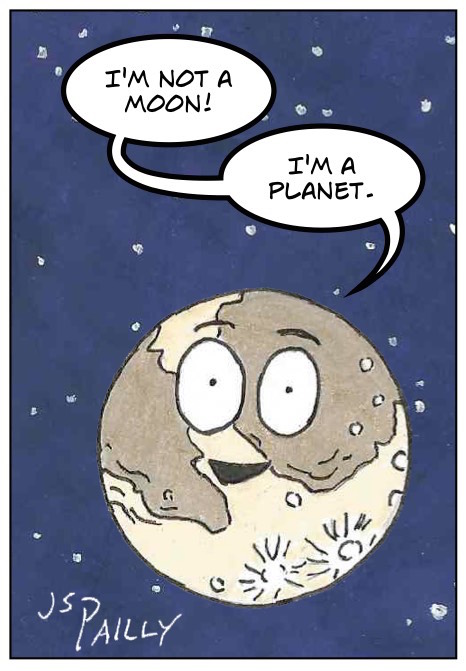
Ag07 GanymedeEh… no, Ganymede is in fact a moon, not a planet, although it does have some planet-like qualities.

  • Ganymede is oddly large for a moon. It’s much larger than Earth’s moon. In fact, it’s larger (in terms of radius) than the planet Mercury, and it’s almost as large as Mars.
  • Ganymede has it’s own magnetic field, providing some protection from solar and cosmic radiation. No other moon can claim that.
  • Ganymede has a thin oxygen atmosphere. It’s nowhere near an Earth-like atmosphere, so leave your space helmet on. But still… oxygen!

All this, combined with plentiful liquid water beneath Ganymede’s surface, would make you think Ganymede is ripe for human colonization.

And indeed, Ganymede has been portrayed multiple times in science fiction as a major human outpost in the outer Solar System. But before you pack your bags and slap a “Ganymede or bust” sign on your spaceship, a note of caution.

Ganymede orbits within Jupiter’s radiation belts. While Ganymede’s magnetic field would provide some protection, it’s not enough to protect you from the radiation concentrated in those radiation belts.

Of course in a distant Sci-Fi future where humanity has overcome the radiation dangers associated with Lunar or Martian colonization, the colonization of Ganymede will seem much more plausible. In the meantime, NASA has its sights set on a different target for human space exploration.

Next week, we’ll be meeting (and possibly colonizing) a moon named Callisto.

Sciency Words: Belts and Zones

Sciency Words BIO copy

Sciency Words is a special series here on Planet Pailly celebrating the rich and colorful world of science and science-related terminology. Today, we’re looking at two closely related terms:

BELTS and ZONES

Jupiter: it’s a big ball of hydrogen. Well, mostly hydrogen. The topmost layer of clouds—the part we can see in visible light—is primarily composed of ammonia, hydrogen sulfide, and water. A dash of other as-yet-unidentified chemicals are also mixed in for color.

If you’ve ever looked at Jupiter, you’ve noticed that it has stripes. The stripes are so pronounced that you can see them even with a cheap backyard telescope, and astronomers have been observing these stripes for centuries.

PIA02863 - Jupiter surface motion animation.gifBy a long-standing convention, the two different kinds of stripes seen on Jupiter are called belts and zones.

  • Zones: Zones are characterized by their lightly colored clouds. Winds in zones generally blow west to east, and the cloud tops rise above the clouds in the neighboring belts.
  • Belts: Belts are darker-colored, with winds blowing east to west. You may notice that Jupiter’s famous storms, such as the Great Red Spot, tend to appear where belts and zones border each other. The clouds in belts are known to sink to lower altitudes than the clouds in zones.

Jupiter isn’t the only planet with belts and zones. The Solar System’s other three gas giants show similar, though less visually distinctive, stripiness, and it’s a safe bet gas giants orbiting other stars will too.

This all seems straightforward enough, but while researching zones and belts for today’s post, I learned something that struck me as very odd. Zones, the clouds of which rise upwards, are often described as cold while belts, with their lower altitude clouds, are described as warm. Does this mean that on Jupiter, warm air sinks and cold air rises? Have the laws of thermodynamics been reversed?

Next Wednesday, I will attempt to solve this peculiar riddle.

What Color is the Great Red Spot?

The title of today’s post may seem like a moronic question, but Jupiter’s Great Red Spot is known to change color, ranging from brick red to ruddy orange to salmon pink. At times, it turns almost white. While the Red Spot remains somewhat mysterious, this color variation may have given us a clue as to what the heck is going on on Jupiter.

Ag05 Great Red Spot

Currently, there are two competing explanations for the color of the Great Red Spot (or G.R.S.): the endogenic and photolytic hypotheses.

The Endogenic Hypothesis

As you may already know, the G.R.S. is a gigantic hurricane (technically, it’s an anticyclone). According to the endogenic hypothesis, this huge, vortex-like storm dredges up dark red material from lower layers of Jupiter’s atmosphere. If that’s true, then the G.R.S. is giving us a peek into Jupiter’s interior.

But there’s a problem with this idea. If the G.R.S. is made of layer upon layer of red stuff, it should appear darker, and it certainly shouldn’t change color so much.

Therefore, an alternate hypothesis is currently winning the scientific debate.

The Photolytic Hypothesis

By mixing two chemicals, ammonia and acetylene, in a lab and exposing the mixture to ultraviolet radiation, scientists were able to replicate the distinctive red color associated with the Great Red Spot.

On Jupiter, the G.R.S. billows up above the surrounding clouds, reaching altitudes approximately 8 kilometers (5 miles) above the gas giant’s “surface.” The vortex-like nature of the storm could keep ammonia and acetylene trapped near the top, prolonging their exposure to ultraviolet rays from the Sun.

Beneath the topmost layer, G.R.S. clouds would likely appear light grey or pure white, and the storm’s observed color variations could be explained by influxes of fresh ammonia and acetylene.

Let’s Keep Staring

The scientific debate isn’t over. The photolytic hypothesis, so popular at the moment, will no doubt face challenges. The endogenic hypothesis, which seems to have fallen out of favor lately, might be revived, or perhaps an entirely new explanation will come to light.

Meanwhile, we need to collect more data. Which means humanity will continue to stare at Jupiter’s Red Spot with our telescopes. Occasionally, we might try poking it with our space probes.

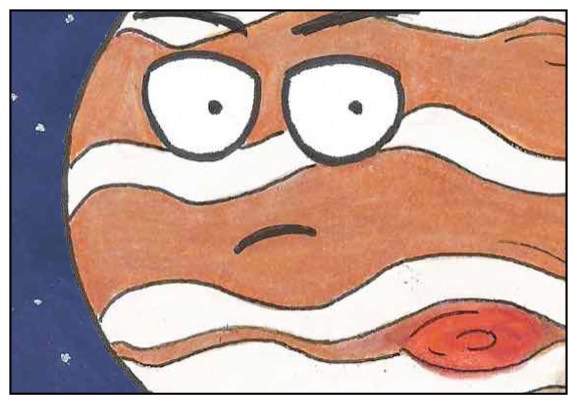
Ag05 Grumpy Jupiter

Links

Is Jupiter’s Great Red Spot a Sunburn? from NASA Science News.

Why is Jupiter’s Great Red Spot… Red? from Sky and Telescope.

* * *

Today’s post is part of Jupiter month for the 2015 Mission to the Solar System. Click here to find out more about this ongoing adventure.

Meet a Moon: Europa

Every Monday this month, as part of the 2015 Mission to the Solar System, were meeting a moon of Jupiter. Today, we’re meeting:

EUROPA

Liquid water. Europa has it. In fact, tiny as Europa is, it has more water in its subsurface ocean than in all the seas and oceans on Earth combined. But does this ocean support life? There are a few ways we could try to find out.

Fly Through a Water Plume

In 2012, Hubble observed water vapor spraying into space from Europa’s southern hemisphere. If Europa’s water plumes originate from its subsurface ocean, and if that ocean does indeed support life, then the plumes may include traces of biological material.

On a relatively low budget, a space probe could fly through one of these water plumes, collecting and analyzing samples of the ejected material.

However, Europa’s water plumes are difficult to detect. They seem to be rare and highly unpredictable, so it would require a lot of luck to position our probe in just the right place at just the right time.

Land on the Surface

Among its many claims to fame, Europa has the smoothest, youngest-looking surface of any object in the Solar System.
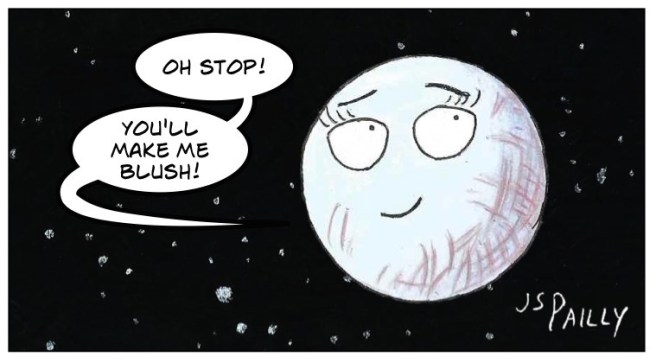
Ag04 Europa BlushThe lack of any significant cratering suggests that, much like Venus, Europa has been resurfaced recently. Most likely, Europa experiences near continuous resurfacing events as water finds its way to the surface, spreads out, and refreezes.

The lines crisscrossing the moon’s surface may be cracks in the ice that have refrozen, with sea salt and other minerals leaving a reddish-brown residue behind. If so, perhaps biological material has been deposited on Europa’s surface as well, just waiting for some NASA rover to come analyze it.

Dive into the Ocean

But to get a definitive answer about life on Europa, we need to go swimming. A robotic probe could melt its way through the surface ice and begin to explore the watery depths below.

Scientists believe Europa’s ocean has plenty of oxygen. There may also be hydrothermal vents near the bottom. Our underwater probe might discover microbial life clustered around these vents, or perhaps the probe’s cameras will observe schools of alien fish.

In one particularly awesome hypothetical scenario, maybe our intrepid little probe will be attacked by angry Europan sea monsters!

Pending Missions to Europa

NASA has preliminary plans to send a probe, tentatively named Clipper, to Europa. Meanwhile, the European Space Agency (ESA) is working on a mission called JUICE (the JUpiter ICy moon Explorer). While JUICE’s main objective is Ganymede, it will also visit Europa.

Best of all, Clipper and JUICE should reach the Jupiter system at around the same time, so NASA and ESA will have plenty of data to share during these missions.

Budget constraints have ruled out the possibility of landing or swimming on Europa, but mission planners have hinted that they might try to fly through a water plume, if Europa gives them a chance to do it.

Links

Scientists Plan to Hunt for Alien Life on Europa from National Geographic.

Sea Salt in Europa’s Dark Materials from Centauri Dreams.

Europa Clipper Concept Team Aims for Launch in 2022 from Spaceflight Now.
Sciency Words: Orbital Resonance

Sciency Words MATH

Sciency Words is a special series here on Planet Pailly celebrating the rich and colorful world of science and science-related terminology. Today, we’re looking at the term:

ORBITAL RESONANCE

Three of Jupiter’s moons, Io, Europa, and Ganymede, have a special relationship with each other. For every complete orbit of Ganymede, Europa completes exactly two orbits, and Io completes exactly four. This relationship is known as an orbital resonance.

To be more specific, Io, Europa, and Ganymede’s 4:2:1 relationship is called a Laplace resonance in honor of Pierre-Simon Laplace, the astronomer who first noticed it.

Galilean moon Laplace resonance animation 2.gif

As the moons pass each other, they pull on each other gravitationally. This would happen with or without the resonance, but the resonance means these gravitational interactions are more regular and repetitive than similar interactions between other passing objects in space.

The persistent gravitational tug-of-wars between these three moons helps keep their interiors warm through a process called “tidal heating.” As a result, Ganymede and Europa appear to have oceans of liquid water beneath their surfaces. Meanwhile, poor Io keeps spewing sulfur all over itself.

Resonances can play an important role in shaping the rest of the Solar System as well. We’ve already seen how resonances with Jupiter created the Kirkwood gaps in the asteroid belt. A similar process created the gaps in Saturn’s rings, and a 3:2 resonance between Neptune and Pluto ensures that the two planets celestial objects won’t crash into each other.

It’s also worth noting that the Solar System is full of not-quite-perfect resonances. Earth and Mars almost have a 2:1 orbital resonance, as do Uranus and Neptune. Jupiter and Saturn almost have a 5:2 resonance. And Callisto (another of Jupiter’s moons) is so close to joining the resonance party. So close! It almost has a 7:3 resonance with Ganymede. (This list could go on for a while.)

Maybe some of these resonances and near-resonances are pure coincidence. But it’s hard to believe they all are. There’s something about gravity that makes planets and moons want to resonate with each other. Science fiction writers might want to keep that in mind while designing new star systems.

P.S.: It’s sometimes mistakenly assumed that Io, Europa, and Ganymede routinely “meet up” on the same side of Jupiter. In reality, whenever two of these moons line up with each other on the same side of their host planet, the third is always somewhere else—frequently the exact opposite side of the planet.


Meet a Moon: Io

For the month of August, I’ve decided to forego my regular Molecular Monday posts. Instead, each Monday this month, we’re going to meet a moon, specifically a moon of Jupiter, starting with:

IO

I’d always assumed that space and everything in it is beautiful. The constellations are beautiful. Saturn is beautiful. The Andromeda Galaxy is beautiful. Then I saw a true color photograph of Io.

Ag01 Io

Io doesn’t look much like a celestial body. It looks more like something I might find growing in the back of my fridge. So what the heck happened to this poor moon?

Of Jupiter’s four largest moons (collectively known as the Galilean moons) Io is the closest to Jupiter. With Jupiter’s enormous gravity on one side and the gravities of the other three Galilean moons on the other, Io is trapped in an endless gravitational tug-of-war. Who wouldn’t feel queasy being pulled in so many different directions at once?

As a result, Io ends up constantly puking its guts out. By the word “puking,” I refer volcanic activity, and by “guts” I mean warm interior materials. These interior materials have a high percentage of sulfur and sulfur compounds. All that sulfur, which has been spewed liberally across Io’s surface, gives the moon its nasty, yellow-green complexion.

Months ago, we talked about the remote possibility that sulfur-based microorganisms could exist in the soupy atmosphere of Venus. I suppose a similar biochemistry could be possible on Io. It’s a stretch, but at least some astrobiologists think the possibility is worth investigating.

Next week, we’re going to me another of Jupiter’s moons, a moon with a much, much higher likelihood of supporting alien life.

* * *

Today’s post is part of Jupiter month for the 2015 Mission to the Solar System. Click here for more about this series.

Sciency Words: Kirkwood Gaps

Sciency Words PHYS copy

Sciency Words is a special series here on Planet Pailly celebrating the rich and colorful world of science and science-related terminology. Today, we’re looking at the term:

KIRKWOOD GAPS

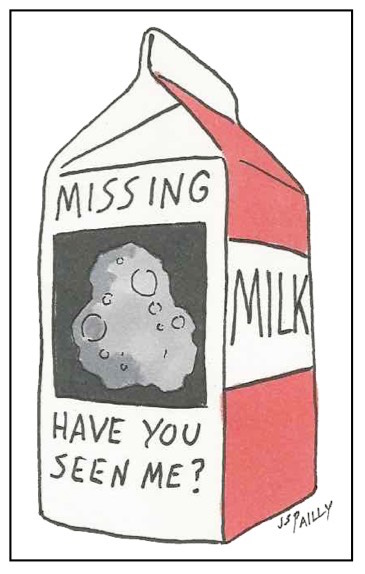
Some of the asteroids in the asteroid belt have gone missing.

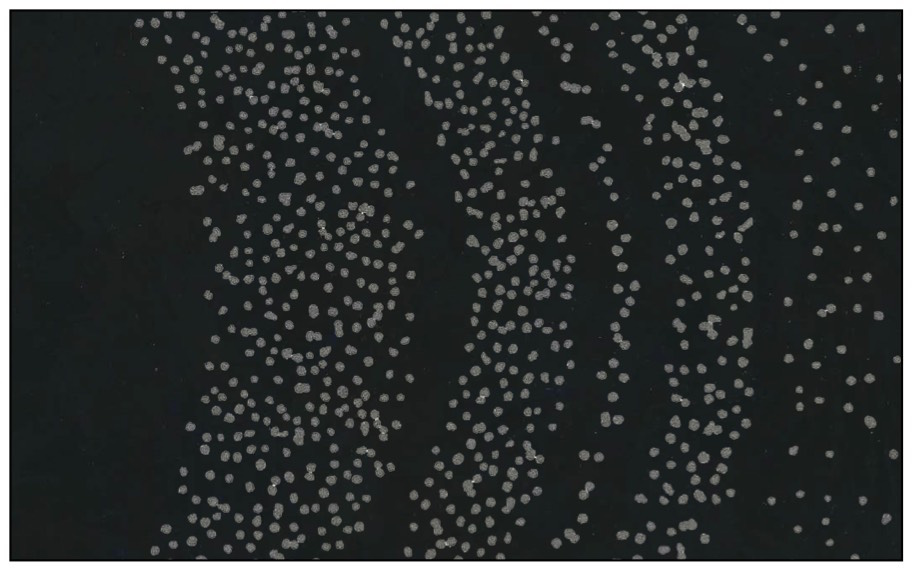
Jy13 Milk CartonThe asteroid belt begins at a distance of 2.1 AU (astronomical units) from the Sun and stretches all the way out to 3.5 AU from the Sun. But there are empty regions at approximately 2.5 AU, 2.8 AU, 3 AU, and 3.3 AU. These empty regions are called Kirkwood gaps.

Jy13 Kirkwood Gaps

Kirkwood gaps are named after Daniel Kirkwood, the astronomer who first discovered them and correctly deduced what caused them.

Any asteroid orbiting the Sun at a distance of 2.5 AU would happen to be in a 3:1 orbital resonance with the planet Jupiter. This means Jupiter would complete exactly one orbit for every three orbits the asteroid completed. The 2.8, 3, and 3.3 AU distances happen to correspond to other orbital resonances with Jupiter.

Asteroids in these resonant orbits would experience nagging, persistent gravitational tugs by the Solar System’s largest planet. This would slowly drag them away from their original circular paths around the Sun and throw them into new, highly eccentric orbits.

Many of the asteroids that cross Earth’s orbital path are probably former residents of the Kirkwood gaps. So the next time an asteroid comes along and wipes out the dinosaurs, don’t get mad at the asteroid. It might not be the asteroid’s fault.

Jy13 Jupiter the Bully

Get mad at Jupiter.

* * *

Today’s post marks the end of asteroid belt month for the 2015 Mission to the Solar System… and the beginning of Jupiter month!

How Crowded Is the Asteroid Belt?

Exact figures for the number of asteroids in the asteroid belt vary widely, but astronomers generally agree there are millions of objects of at least one kilometer in diameter. That sounds like a lot, but it turns out the asteroid belt is a fairly empty and lonely place.

Jy12 Asteroid Echo

The average distance between main belt asteroids is just shy of 1,000,000 kilometers (600,000 miles). For comparison, the distance between the Earth and Moon is a little less than 400,000 kilometers (240,000 miles).

But for hotshot space pilots like myself, there are still some opportunities to zigzag between and around dangerously close asteroids, perhaps while being pursued by hordes of Imperial TIE Fighters.

Over a hundred asteroids are known to have at least one tiny moon. Binary and trinary asteroids have also been discovered. Those are pairs or trios, respectively, of asteroids of roughly equal mass that are locked into orbit around their common center of gravity.

And of course when asteroids collide, they often form debris fields. This debris can linger for weeks before recombining as a rubble pile asteroid. Maybe these chaotic post-collision debris fields are just the perfect place to try evading the forces of the Evil Empire.  Assuming you can find one.

Jy12 Millennium Falcon

Links

10 Things You Need to Know About Asteroids from Time and Date.

Images of Asteroid Ida and Dactyl from NASA Near Earth Object Program.

Binary Asteroid from The Worlds of David Darling: Encyclopedia of Science.

Sciency Words: Rubble Pile

Sciency Words BIO copy

Sciency Words is a special series here on Planet Pailly celebrating the rich and colorful world of science and science-related terminology. Today, we’re looking at the term:

RUBBLE PILE

“Rubble pile” is not a formal part of any asteroid classification system, but it appears so often in scientific literature about asteroids that it deserves special attention. A rubble pile asteroid is really multiple asteroids tenuously held together by their own gravity.

Jy11 Hello Rubble Pile

Rubble piles probably form in the aftermath of asteroid collisions. When two asteroids smash into each other, gravity starts pulling the resulting debris back together again. A rubble pile can then form in as little as a few hours.

Since they’re not single, solid objects but conglomerations of multiple objects, rubble piles tend to have empty spaces inside them. This lowers the overall density of the asteroid, which helps astronomers distinguish rubble piles from regular “monolithic” asteroids.

Rubble piles have a minimum rotation period of approximately two hours. If they start spinning faster than that, they’re liable to fling themselves apart. However, astronomers have observed some rubble piles rotating faster than they should be able to, suggesting that additional forces besides gravity may help hold them together.

Exerting even a tiny force on a rubble pile could cause the thing to break apart. You can’t easily land on a rubble pile’s surface for mining purposes, and deflecting a rubble pile from a collision course with Earth would be tricky. As a result, rubble piles could pose many challenges to humanity in the future.

Links

Potentially Dangerous Asteroid is Actually a Pile of Rubble from Space.com.

Cohesive Forces Prevent Rotational Breakup of Rubble-Pile Asteroid (29075) 1950 DA from Nature.

Rubble-Pile Asteroid from The Worlds of David Darling.

* * *

Today’s post is part of asteroid belt month for the 2015 Mission to the Solar System. Click here for more about this series.