Sciency Words: Technological Geometrization

Today’s post is part of a special series here on Planet Pailly called Sciency Words. Each week, we take a closer look at an interesting science or science-related term to help us expand our scientific vocabularies together. Today’s term is:

TECHNOLOGICAL GEOMETRIZATION

In 1990, the Galileo spacecraft was on its way to Jupiter and needed to perform a gravity assist maneuver at Earth. This turned out to be a golden opportunity for science. Could a typical NASA space probe equipped with a standard suite of instruments detect signs of life on a planet where we already knew life existed?

In a 1993 paper, Carl Sagan and colleagues presented their findings in this “control experiment for the search for extraterrestrial life.” The paper explores all the things Galileo observed and, more intriguingly, some of the big things Galileo missed. Things like the “technological geometrization” of the planet’s surface, as the paper called it.

As far as I can tell, technological geometrization is not a term that’s stuck in the scientific lexicon, which is a shame. I think it’s a really good term. It refers to the way technologically advanced civilizations would tend to create geometric patterns on their surfaces of their planets.

The planet Coruscant from the Star Wars universe is a great example. The entire planet is urbanized, to the point that natural geological features are completely covered over. From space, all you can see are straight lines and perfect circles—efficient city planning on a global scale.

As another example, back in the 1800’s Percival Lowell and an embarrassingly large number of other astronomers thought they saw canals crisscrossing the surface of Mars. Those canals, if they really existed, would have been clear evidence of a technologically advanced society geometrizing their planet.

Earth’s surface displays only the faint beginnings of technological geometrization: rectangular patches of farmland and the grid patterns of streets and highways. These features are visible from space (Google Earth proves that), but you have to get fairly close to Earth to notice those kinds of details.

Apparently Galileo didn’t get close enough. At an image resolution of 1-2 kilometers per pixel, the technological geometrization of Earth was effectively invisible.

P.S.: That paper by Sagan and Company was a really good paper. It served as the basis for my recent “Alien Eyes on Earth” series.

Have I Been Drawing Enceladus Wrong?

Enceladus, one of Saturn’s moons, is becoming increasingly famous as one of those places in the Solar System where we’re most likely to find alien life. It certainly has the water for it. On this blog, I traditionally depict Enceladus like this:

It’s a nice, icy-looking world with a cheerful personality and active geysers in its south polar region. But have I been drawing Enceladus wrong this whole time? Would it make more sense to draw it like this?

Maybe. According to this article from Saturn Daily, Enceladus may have tipped sideways (by about 55°) at some point in its history. Apparently surface features reveal evidence of an old equator and old north and south poles.

The story is that one day, Enceladus was orbiting along, minding its own business, when it got whacked hard by an asteroid. Saturn Daily tells us that following the impact, Enceladus would have spent about a million years wobbling back and forth until it could reorient its rotation.

But Enceladus did manage to reorient itself. It has a new axis of rotation, a new north and south pole, and a new equator. It’s not a sideways moon, at least not anymore, which means by the logic of space cartoons, I’ve been drawing Enceladus correctly.

At least I think I have. What do you think? Does it make sense to draw Enceladus based on its current orientation or its (possible) original orientation?

Sciency Words: Coronal Heating Problem

Today’s post is part of a special series here on Planet Pailly called Sciency Words. Each week, we take a closer look at an interesting science or science-related term to help us expand our scientific vocabularies together. Today’s term is:

CORONAL HEATING PROBLEM

This is the Sun. He’s kind of a big deal, and he knows it.

The interior of the Sun is several million degrees Celsius. By comparison, the surface of the Sun is quite chilly. It’s only a few thousand degrees. Still, if you were standing on the surface of the Sun, you wouldn’t last long.

But before you launch yourself into space to escape the heat, there’s something you should know: as you fly away from the Sun, passing through the corona, the temperature starts getting hotter again. It’s not quite as hot as the interior, but still… we’re back into million-plus degree heat.

If that doesn’t make sense to you, that’s okay. It doesn’t make sense to me either, or anyone else. Astro-scientists have been baffled by this for decades now. They call it the coronal heating problem.

I first heard about the coronal heating problem back in 2014, when I was starting my research for what became the 2015 Mission to the Solar System. To be honest, it’s not something I’ve spent a lot of time thinking about since then. Every once in a while, it comes up again and I think, “Oh right… so they still haven’t figured that out yet?”

But as you may heave heard last week, NASA’s on the case. Their newly named Parker Solar Probe is going to skim very close to the Sun and try to figure out what the heck’s going on.

Parker is scheduled for a launch window in July/August of 2018. Its mission is expected to last until 2025. So hopefully a decade from now, whenever I’m reminded of the coronal heating problem, it won’t be a problem anymore, and I’ll be able to think, “Oh right… they finally figured that out!”

Sciency Words: Biogenic (Alien Eyes on Earth, Part 5)

Today’s post is part of a special series here on Planet Pailly called Sciency Words. Each week, we take a closer look at an interesting science or science-related term to help us expand our scientific vocabularies together. Today’s term is:

BIOGENIC

A passing alien spacecraft has been observing our little, blue planet for two weeks now, and it’s time they reported their findings back to their homeworld. One word—one scientific term—will feature prominently in their report: biogenic.

Actually, it’ll be the word xygjaflubozux, but that roughly translates into English as biogenic. It’s an adjective meaning “generated by biological processes.”

It’s difficult to impossible to directly detect life forms on a distant planet, so instead good astro-scientists go looking for chemicals that may have biogenic origins.

In the case of Earth, the aliens report they’ve detected an alarming amount of oxygen in the atmosphere. Oxygen is such a highly reactive chemical that it’s hard to imagine how it could persist in a planet’s atmosphere over long periods of time, unless….

Then there’s methane (which we never talked about in this series… oops). The presence of methane is even harder to explain, because methane reacts so readily with oxygen. All that methane should oxidize away within fifty years, unless….

Could it be biogenic oxygen? Biogenic methane? What about some of the other strange chemicals in Earth’s atmosphere, like nitrous oxide? Could there be biological processes at work constantly replenishing these chemicals in Earth’s atmosphere? These questions will be debated among the alien scientific community for many standard cycles to come.

The only unambiguous evidence of life on Earth, from the aliens’ perspective, were those radio signals coming from the planet’s surface. In a sense, you might say these signals have a biological origin, though I doubt human astro-scientists would describe them as biogenic radio emissions. But maybe the word xugjaflubozux has a slightly broader flavor of meaning and could still apply (how should I know? I don’t speak alien!).

This is the final post for my “Alien Eyes on Earth” series. The aliens have to move on and explore other star systems, but something tells me they’ll be back.

Today’s post was inspired by a 1993 paper by Carl Sagan and others. Sagan and his colleagues wanted to know which of Earth’s features can be observed by a passing spacecraft and, perhaps more interestingly, which features cannot.

Alien Eyes on Earth, Part 4

Right now, as you read this, our world is being watched keenly and closely by a nearby alien spacecraft. So far the aliens have only observed circumstantial evidence of life: water, oxygen, and a mysterious light-absorbing chemical (chlorophyll). But the aliens are about to detect something that will prove conclusively not only that there’s life on Earth but that there is intelligent life.

Okay, the content of Earth’s radio broadcasts might not seem all that intelligent, but the existence of such broadcasts is clear, unambiguous evidence of a technologically advanced civilization of some kind.

First off, these radio signals are being affected by Earth’s ionosphere in a particularly telling way. During the day, the ionosphere becomes energized by solar radiation, effectively blocking the planet’s radio emissions from escaping into space. But at night, the ionosphere calms down and allows more radio signals through. Because the aliens detect most of the radio emissions from the night side rather than the day side, it would seem clear to them that the signals originate on the planet’s surface, rather than sources near or directly behind the planet.

Secondly, the radio emissions remain stable at constant frequencies over the course of many hours. Naturally occurring radio emissions would tend to drift significantly from one frequency to another over that time period. This strongly suggests an artificial source.

And thirdly, these signals exhibit “pulse-like amplitude modulation”—in other words, the signals appear to be modulated in such a way as to contain bits of information. I imagine this would present something of a double challenge for the aliens: first the technical challenge of decoding the signals, and then the linguistic challenge of interpreting our language—or rather, our many languages.

Whether or not the aliens could make any sense out of these radio signals, this sort of pulsed amplitude modulation is never observed with naturally occurring radio sources. The only reasonable hypothesis is that there is intelligent life on the planet’s surface.

Tomorrow, in the final post for this “Alien Eyes on Earth” series, the aliens will report their findings back to their home planet, and there’s one word—one particular scientific term—that will feature prominently in that report.

* * *

Today’s post was inspired by a 1993 paper by Carl Sagan and others. Sagan and his colleagues wanted to know which of Earth’s features can be observed by a passing spacecraft and, perhaps more interestingly, which features cannot.

P.S.: Of course the aliens would pick up more than just pop music. They’d be able to hear our news, educational programming, personal cell phone calls, coded military transmissions, et cetera, et cetera… but something tells me that music in particular would draw their interest. The special combination of mathematics and aesthetics is, in my opinion, one of the strongest indicators of intelligent life.


Jupiter’s All Warm and Fuzzy Inside

Don’t let Jupiter’s stormy personality fool you. He’s all warm and fuzzy on the inside.

I have a couple more “Alien Eyes on Earth” posts on the way, but last week one of my favorite space missions was in the news: the Juno mission to Jupiter.

Now I have to confess I haven’t done a whole lot of research on what Juno’s found. I take it some of the highlights are:

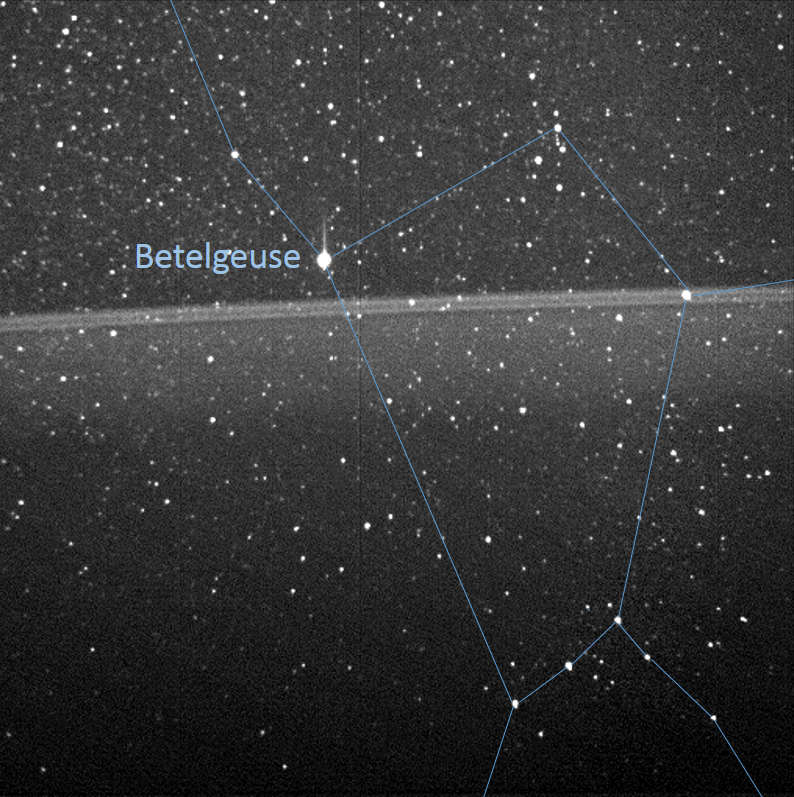
  • We got a cool picture of Jupiter’s rings with the constellation Orion in the background.
  • Those cyclones clustered around Jupiter’s poles—those are still weird.
  • It sounds like something freaky is happening with Jupiter’s auroras. I’m planning to do a separate post on that in the near future.

But the thing that really grabbed my attention was this: Jupiter’s core is being described as “fuzzy.” I’m not sure how to visualize that, but it’s also being described as “partially dissolved,” which makes a little more sense to me.

We know about this because Juno is gravity mapping the planet—using highly precise measurements of Jupiter’s gravitational field to determine how mass is distributed in the planet’s interior.

We also know about it thanks to Juno’s magnetometer. Planetary magnetic fields are generated by an internal dynamo effect, the result of all that pressurized liquid metal swirling and churning around a planet’s core. But according to Juno’s magnetometer, it seems Jupiter’s magnetic field is not what we expected, which suggests… what? Multiple dynamo effects? A big dynamo in the middle with smaller dynamos surrounding it?

Again, I haven’t done any proper research about this. Not yet. But I had a thought that I wanted to throw out there: we never figured out why Neptune’s magnetic field is so out of whack.

So now I’m wondering if there could be a connection there. Could weird, confusing, complicated magnetic fields just be a common feature of gas giants?

Also, the Sun has a wildly complex tangle of magnetic field lines around it. Might there be a relationship between the weird magnetic fields of gas giant and the weirder magnetic fields of stars?

I don’t have any answers. I’m just speculating after all the Juno news last week. It’ll be interesting to see what Juno tells us next.

On Thursday, we’ll get back to those aliens studying Earth from a distance.

Links

Jupiter Surprises in Its Closeup from Science Friday.

Jupiter Data from Juno Probe Surprises Scientists from Solar System Digest.

Jupiter Surprises in First Treasure Trove of Data from NASA’s Juno Mission from Spaceflight Now.

Sciency Words: Photosynthesis (Alien Eyes on Earth, Part 3)

Today’s post is part of a special series here on Planet Pailly called Sciency Words. Each week, we take a closer look at an interesting science or science-related term to help us expand our scientific vocabularies together. Today’s term is:

PHOTOSYNTHESIS

This post is mainly for my extraterrestrial readers, especially you extraterrestrials who are observing Earth from a distance and are a little puzzled by what you’re seeing.

By now, you’re aware of Earth’s active water cycle, and you’ve observed an alarming amount of oxygen in Earth’s atmosphere. You may have also noticed there’s a strange chemical spread across Earth’s landmasses, a chemical that absorbs red light.

This chemical also absorbs blue light, but due to an atmospheric scattering effect, the blue absorption signature might not be easy for you to see. Also, there’s more of this hard-to-identify chemical in Earth’s oceans, but between the atmospheric scattering of blue light and water’s ability to absorb red, you probably can’t detect it.

I realize you aliens must be pretty advanced. I mean, you’ve developed interstellar travel, after all. Even so, I bet you’re struggling to identify this strange chemical substance. Let me help you out: it’s a weird, complicated molecule we humans call chlorophyll, and it’s used in a biochemical process we call photosynthesis.

Photosynthesis comes from two Greek words: photo, meaning light, and synthesis, meaning synthesis.

Here on Earth, photosynthetic life forms like plants, algae, and cyanobacteria use chlorophyll to absorb sunlight (specifically the red and blue wavelengths). This light energy is then used for a sort of carefully controlled photolysis of water and carbon dioxide molecules, which are then recombined to make carbohydrates.

Please note: there are alternative versions of photosynthesis here on Earth that do not require chlorophyll. It’s just that these alternatives aren’t very popular. Haven’t been for over two billion years. This despite the fact that chlorophyll-based photosynthesis produces an extremely hazardous byproduct: oxygen. But hey, at least now you know where Earth’s mysterious oxygen atmosphere comes from!

You probably have something like photosynthesis back on your home planet, but I imagine the details must be different. Some other chemical probably does the job chlorophyll does here on Earth. Whatever your planet’s photosynthetic chemical is, I bet we humans would have a really hard time identifying it… just as you guys were struggling to identify Earth’s chlorophyll.

* * *

Today’s post was inspired by a 1993 paper by Carl Sagan and others. Sagan and his colleagues wanted to know which of Earth’s features can be observed by a passing spacecraft and, perhaps more interestingly, which features cannot.

Alien Eyes on Earth, Part 2

If an alien spaceship were passing by, there are several things the aliens would notice about Earth, even from a distance. Water, for one thing. And not just any old water, but water in solid, liquid, and gaseous phases. And if that weren’t enough to grab the aliens’ attention, a spectrographic analysis of the atmosphere would reveal another big surprise: oxygen. Alarmingly high quantities of oxygen.

We humans are used to thinking of oxygen as a good thing, something beneficial to life. From an alien perspective, that may not be so. Imagine if I told you about a planet with a 20% chlorine atmosphere. Would you want to go there? Probably not. Chlorine is a highly reactive, extremely toxic chemical. It’s an oxidizer. One of the strongest oxidizers on the periodic table.

But as you could probably guess from the name, oxygen is also a really strong oxidizer—almost as strong as chlorine. We humans have evolved in an oxygen-rich environment. We’re used to it, and we’ve adapted to it so well that oxygen has become a benefit to us rather than a liability.

To extraterrestrials, however, a 20% oxygen atmosphere could be as frightening as a 20% chlorine atmosphere would be to us.

So where does all that oxygen come from? The aliens already know about Earth’s water, so they might speculate about water molecules being broken apart by UV radiation from the Sun. This process, known as photolysis, would turn water (H2O) into atomic hydrogen and atomic oxygen, which could then recombine to make molecular hydrogen (H2) and molecular oxygen (O2). Light-weight hydrogen molecules would then escape to space and be swept off by the solar wind, leaving the heavier oxygen molecules behind.

That might account for some of Earth’s oxygen, but Earth has a lot of oxygen. A lot more than can be explained by photolysis alone. So how can there be so much oxygen? What keeps all that highly reactive oxygen from reacting itself away… unless something is constantly replenishing Earth’s oxygen supply?

These aliens observing our planet are good scientists, so they won’t jump to conclusions too quickly. It’s possible, the aliens might say to each other, that all this oxygen is being generated by biological activity. But they can’t know that for sure. Not yet.

Tomorrow on Sciency Words, we’ll look at a scientific term that you have almost certainly heard of before, but that the aliens maybe haven’t.

* * *

Today’s post was inspired by a 1993 paper by Carl Sagan and others. Sagan and his colleagues wanted to know which of Earth’s features can be observed by a passing spacecraft and, perhaps more interestingly, which features cannot.

Alien Eyes on Earth, Part 1

Aliens are naturally curious about Earth, once they notice it’s there. Earth is covered in water. That by itself isn’t so unusual, but even from a great distance it’s obvious there’s something special about Earth’s water.

Hydrogen and oxygen are the #1 and #3 most common elements in the universe, respectively; therefore, it shouldn’t surprise anyone that H2O, the simplest hydrogen/oxygen compound, is abundant throughout the cosmos.

In a gaseous form, water is often present in the atmospheres of gas giants. Solid water can be found on many asteroids and comets, as well as on icy worlds like Pluto, Titan, or Europa. Liquid water sometimes exists beneath the surfaces of these icy worlds, and it’s sometimes found on rocky worlds like Mars, typically with salt or other impurities mixed in to help lower its freezing point.

But any passing spaceship observing Earth would notice evidence not just of water, not just of liquid water, but clear evidence of water in all three phases.

  • Gaseous water: the characteristic absorption lines of water vapor can be detected in a spectrographic analysis of Earth’s atmosphere.
  • Solid water: highly reflective polar regions indicate the presence of ice.
  • Liquid water: and then there are specular reflections—glints of sunlight reflecting off very smooth surfaces, surfaces so smooth that they almost certainly must be liquid.

It would be one thing to have liquid water sitting stagnant on the planet’s surface, but Earth’s water appears (even from a distance) to be cycling through multiple phase transitions. Passing aliens might not know what that means, but it’s certainly strange enough to make them curious about Earth. Perhaps curious enough to come take a closer look.

* * *

Today’s post was inspired by a 1993 paper by Carl Sagan and others. Sagan and his colleagues wanted to know which of Earth’s features can be observed by a passing spacecraft and, perhaps more interestingly, which features cannot.

My First Scientific Paper

As a follow-up to yesterday’s post on how to read a scientific paper, I wanted to share the story of my first attempt to read such a paper myself. I was doing research in preparation for the 2015 Mission to the Solar System, and I’d found a paper titled “Thermal Stability of Volatiles in the North Polar Region of Mercury.”

I was under the impression this paper was sort of a big deal as far as Mercury exploration is concerned, so I felt I ought to read it. Previously I’d only read the abstracts of papers, and occasionally the conclusions. I’d never before tried to read a scientific paper in full.

It didn’t go well. Not at first. The paper was only four pages long, but it felt like forty and may as well have been four hundred. I was particularly confused by the usage of the word volatile, as in volatile chemicals. I thought I knew what that meant. Turned out I was wrong, and it took awhile for me to figure out what volatiles really are.

I must’ve read the paper straight through three or four times before something in my brain clicked. And then…

I got it! I actually got it! NASA had found water (a volatile) on Mercury! I’d already learned about this from another source, but the fact hit me with a new weight. Suddenly I not only knew about Mercury’s water, but I also knew where the water was located (frozen inside dark polar craters), why it hadn’t melted or sublimated away (at the poles, crater rims shield it from sunlight), and how NASA had found it (by bouncing radio waves off the ice sheets).

Maybe this will sound silly, but reading that “Thermal Stability” paper was a life-altering experience for me. I’ll never forget that moment of revelation when all that sciency stuff started making sense. For the first time, Mercury felt like a real place to me. For the first time, I “got” how NASA does what it does.

And most importantly, I learned that even though I’m just a science fiction writer and don’t have any kind of scientific degrees, I can still read and comprehend scientific publications. Which means I can bypass the unreliable science reporting I saw on T.V. or the Internet and go straight to the source for my scientific knowledge.