Contaminating Mars

The story I’m about to tell is a work of fiction, but it could very well happen in reality one day.  If it did, it could cause an enormous scandal in the scientific community, ruin what remains of NASA’s reputation, and end the careers of anyone directly involved.
Mars

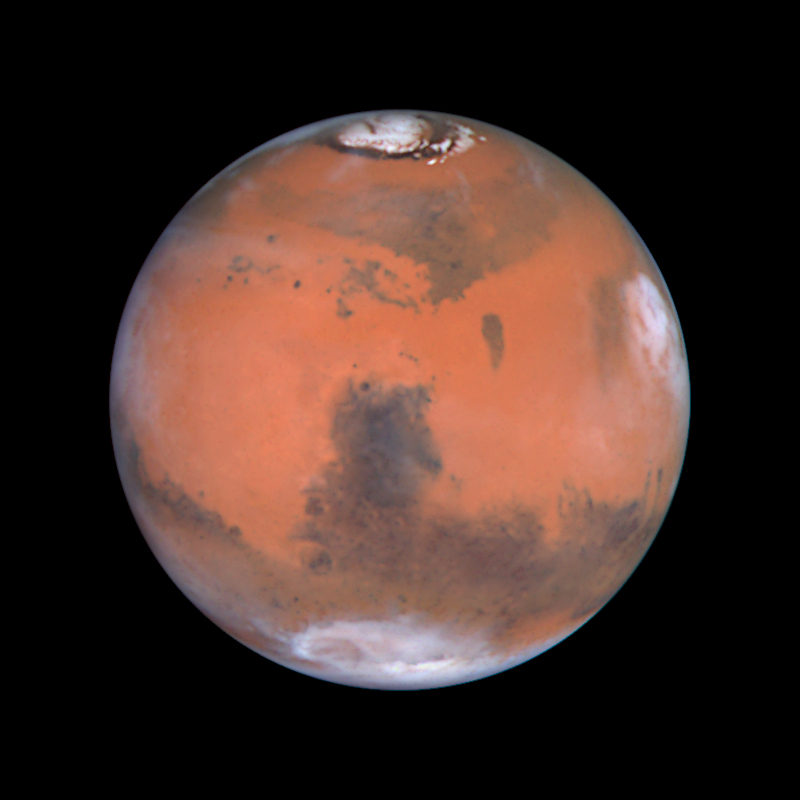
The year is 2020.  NASA’s latest Mars rover, Intrepid, has landed successfully and wheeled around a bit, proving that all its systems are functioning.  Intrepid’s predecessor, the Curiosity rover, found evidence in 2013 that life could exist on Mars, but Curiosity wasn’t equipped to test if any life forms do exist there.  Intrepid’s mission is to follow up on Curiosity’s work.

NASA engineers have equipped Intrepid with state-of-the-art biochemical research equipment.  They gave it new technology that wasn’t available when Curiosity was launched, as well as delicate, new digging tools for collecting soil samples.  Scientist carefully selected Intrepid’s landing site, putting it near what they believe is subsurface liquid water melting from one of Mars’s polar ice caps.

Intrepid begins its work, and the very first test comes back positive.  There’s bacterial life on Mars!  Scientists around the world celebrate.  The media goes crazy, and the old theory that life on Earth began on Mars is revived once again when someone notices similarities between the DNA of the Martian microbes and that of life on Earth.  In fact, the Martian bacteria seem to have a lot in common with E. coli.

But the next test shows fewer bacteria.  The one after that shows fewer still, and soon no bacteria can be found at all.  It seems the “Martian” bacteria aren’t capable of surviving on Mars.  Soon, the truth comes out.  One of those delicate digging tools was opened before it left, meaning it may have been contaminated.  Previous studies have already shown that E. coli might be able to survive in space if shielded from ultraviolet radiation.

End of story.

Currently, the United States is part of an international agreement called the Outer Space Treaty, which stipulates that any probe we send to another planet must be thoroughly decontaminated.  NASA even has a Planetary Protection Officer, Dr. Catherine Conley, in charge of making sure that we don’t introduce invasive species to alien worlds.  The point of all this is not only to protect alien ecosystems (if they exist) but to ensure that if we do discover life on another planet, we’ll know for certain that its genuine alien life and not something that stowed away on our own space vehicles.

And yet despite the Outer Space Treaty, despite NASA’s own rules and Dr. Conley’s best efforts, one of Curiosity’s digging apparatuses was opened and potentially contaminated before it left Earth in 2011.  Could any bacteria have survived the long journey to Mars?  We don’t know.  It’s possible.  So far it doesn’t seem like any harm was done, but this could be a costly mistake if it ever happens again.

What Do the Aliens Think?

I often worry about what aliens will think when they see our television broadcasts. By now, Howdy Doody has reached Aldebaran, Gilligan’s Island has reached Eta Leporis, and the residents of Alpha Centauri have had the opportunity to watch several seasons of Dancing with the Stars.

But sooner or later, our extra terrestrial neighbors will see this:

When that days comes, I expect the aliens will wonder if we Earthlings aren’t so different from them after all.

P.S.: Yes, this is an actual children’s television program. No, I don’t know why.

Sciency Words: Turing Test

Sciency Words Logo

Today’s post is part of a special series here on Planet Pailly called Sciency Words. Every Friday, we take a look at a new and interesting scientific term to help us all expand our scientific vocabularies together. Today’s word is:

THE TURING TEST

Let’s set aside the usual Sci-Fi tropes about robots becoming self-aware, intelligent, and possibly possessing souls. Let’s also set aside our fears of robot rebellions. That’s not what the Turing test is about. The Turing test asks a simple question: can a machine or computer program fool people into believing it’s human? According to recent reports, a program named “Eugene” has finally passed this test.

Admittedly, the bar is set fairly low. To pass the Turning test, a computer only has to fool 30% of the people it talks to. Eugene managed to pull it off (barely) by pretending to be a 13-year-old boy from Ukraine while chatting online with people in England. This means that any mistakes or inconsistencies might have been perceived as the result of communicating with a child and/or non-native English speaker.

Now that one computer program has passed the Turing test, more will surely follow. The programmers behind Eugene say they’ll keep working, trying to find ways to make their creation even smarter. As a lifelong Sci-Fi nerd, I can’t help but find this ominous, but something like Commander Data or the Terminator remains a distant fantasy. In real life, we can expect programs like Eugene to improve things like our automated customer service experience. We can also expect more effective online scams.

Image courtesy of xkcd.

Save the Great Red Spot!

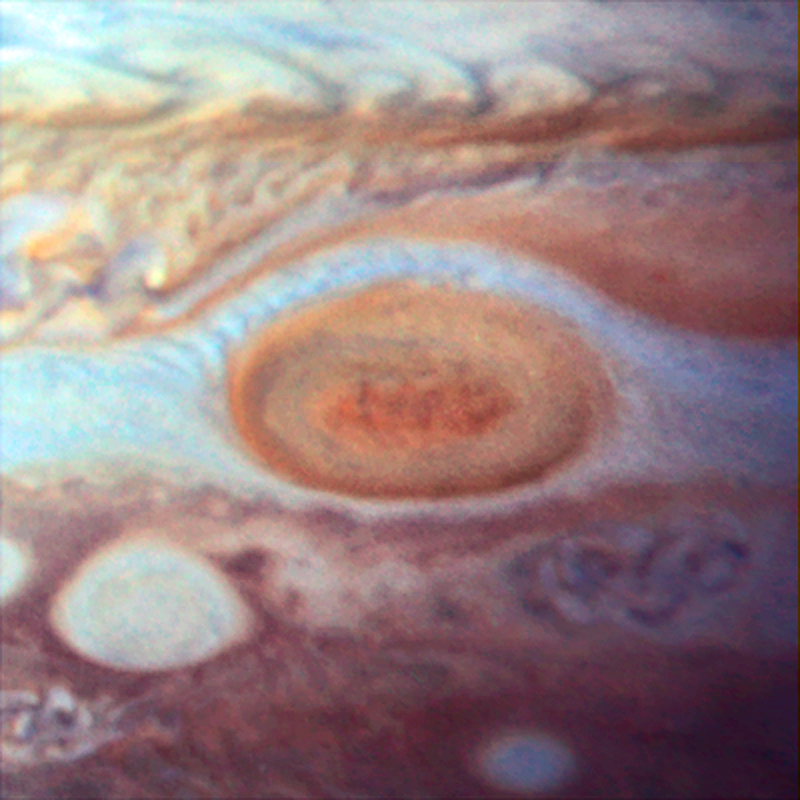
The ignominy of losing Pluto as a planet will be nothing compared to losing the Great Red Spot on Jupiter.  Pluto still exists.  It may not be considered a planet, but it still exists.  Unfortunately, the Great Red Spot, astronomers tell us, is shrinking.  Perhaps in a century or so, it will dissipate completely, and Jupiter will just be that big, stripy planet with no other interesting features.

Great Red Spot

Long ago, in the time of Isaac Newton, everyone assumed the heavens were permanent and unchanging, planets and stars forever locked in their circular pathways through the sky.  Even today, most predictions of future space events seem to forecast changes millions or billions of years in the future.  Sadly, some things can change much more quickly.

The Great Red Spot is sort of like an enormous hurricane, possibly the most beloved hurricane in the Solar System.  Let us hope that the weather on Jupiter takes a sudden turn for the worse, allowing the Red Spot to return to its former glory.

Can Life Exist on Earth? An Extra-Terrestrial Perspective

Image by mensatic.
Image by mensatic.

As human astronomers scan the heavens, trying to locate alien life, they generally assume they know what they’re looking for: a planet similar to Earth.  They’ve confirmed the discovery of hundreds of worlds, but none are quite like our little, blue planet.  So astronomers keep searching, but what if they’ve overlooked something?  What if Earth is not typical of life-bearing planets?

To get a better sense of what astronomers should be looking for, I reached out to a few extra-terrestrial friends to ask what they think of life on Earth.  Here’s what they said:

  • Eiol of the planet Sisip: Life on Earth?  How could it get by with all the planet’s water sloshing around in liquid form?  Ice is far more convenient.  It’s easier to transport, it’s harder for contaminates to mix in, and it makes a satisfying crunch sound when you chew it.
  • Dr. Ullumon of Cygnus: Carbon-based life is impossible.  Complex organisms can’t develop from an element as plain and ordinary as carbon.  Perhaps one day we might find silicon-based life with carbon impurities, but no living thing could truly be based on carbon.
  • Globitarto of the Tartonians: All life forms require the nourishment of cosmic radiation, but Earth is enveloped in a magnetic field which blocks most of that radiation from reaching the planet’s surface.  Stories about intelligent life on Earth make good science fiction, but I’m afraid it’s scientifically implausible for anything to survive in that radiation-poor environment.
  • Vivi Gol of the planet Poxx: If there’s life on Earth, surely the Martians would have discovered it by now.  Why haven’t they said anything?

When I told my extra-terrestrial friends that I am from Earth, most of them laughed, and Dr. Ullumon suggested I seek medical attention for all the carbon contamination he found in the blood samples I provided.  Just goes to show how difficult it is for some people to imagine life forms that are different from themselves.

Sciency Games: Kerbal Space Program

Today’s post is part of a series of posts profiling sciency video games.  These are educational games, most available for free online, that can really help you gain a deeper understanding of science.  Click here to find out more about this series.

* * *

If I ever get the opportunity to go to space, I’m pretty sure I’ll be this guy:

The best way to learn how to do something is to actually do it, and preferably to do it repeatedly.  In Kerbal Space Program, you are in charge of your own space program with an infinite number of squishy, green volunteers who are so eager to get to space they don’t care what crazy, new spaceship design you’ve come up with.  This game will teach you about space travel by making you do it over and over again.

That might sound tedious and dull, but it’s not.  When you sit down to build your first spaceship, I recommend reading the descriptions of the various spaceship parts.  We’re told that some pieces of highly advanced equipment came from the local junkyard.  Others were found lying by the side of the road.  Still others are described as “dishwasher safe” or “unsuitable for children under the age of 4.”  If you’re still not convinced this is an educational video game with a sense of humor… watch the video again.  Or watch this one:

The only downside to Kerbal Space Program is that you don’t receive much guidance.  You basically have to figure out what you want to do and how you want to do it through trial and error.  My first launch ended in spectacular failure because, among other things, I didn’t know to include a parachute on my space capsule.  But I learned, and now I’m better at this game, and none of my Kerbals have died since!

As a science fiction writer, I doubt I’ll ever write a highly technical description of how to launch a spacecraft into orbit—I wouldn’t want to bore my readers—but even though I may never include such information in a story, I still need to know it.  What differentiates great science fiction from the mediocre variety are authors who can write about science with confidence, as opposed to authors who can only make timid guesses about futuristic technology.  With the help of my Kerbal friends, I hope to become more confident about the science part of my storytelling.

Sadly, Kerbal Space Program is the only game on my list of sciency video games that isn’t free, but if you’re interested, please click here to find out how you can get the free demo version, or click here to buy the game.

NASA’s Next Launch System: the Trampoline

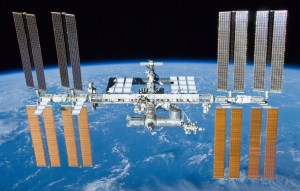
Let’s say you don’t own a car, so you carpool to work.  You have a nice arrangement with a friend: he drives, you pitch in for gas, and everybody’s happy.  Then you and your friend get into a fight, and all of a sudden you can’t get a ride to work.  This is now the situation between the United States and Russia after our dispute over Ukraine.  The Russians are no longer willing to give American astronauts rides to the International Space Station.

Image courtesy of NASA

Now I don’t write a blog about politics, and I don’t want to go into a discussion about the Ukrainian situation.  It sounds to me like there are good guys and bad guys on both sides, and the whole thing is a complicated mess.  But now this mess is affecting the one issue that I and my blog care about most: space.

The plan was that, following the termination of the space shuttle program, private companies like SpaceX or Virgin Galactic would pick up the slack.  After my initial skepticism, I came to see this as a good thing if only because it meant American space exploration would no longer be totally beholden to the whims of Congress.  But those private space companies aren’t ready yet.  They need at least a few more years before they can start launching astronauts into space.

One Russian official suggested that, in the meantime, NASA could try using trampolines to send its astronauts into space.  We can only hope this quarrel with Russia will provide the impetus private space companies need to prevent further delays and get their fleets into orbit.  Otherwise, the future of the International Space Station is in jeopardy.

Sciency Games: Super Planet Crash

Today’s post is part of a series of posts profiling sciency video games. These are educational games, most available for free online, that can really help you gain a deeper understanding of science. Click here to find out more about this series.

* * *

The Solar System is fragile. The orbits of all the planets are affected not only by the gravity of the Sun but by the gravity of their fellow planets. Not only that: the combined gravitational pull of all the planets affects the Sun, causing it to wobble in place. Our Solar System is like a big, complicated machine with lots of moving parts, vibrating and shuddering, ready to burst into a million pieces at the slightest disturbance.

Screen Shot 2014-04-26 at 12.38.20 AM
Lots of planets packed into a relatively small space.  This won’t end well.

So with that in mind, it’s time you tried to make your own solar system. In the game Super Planet Crash, you drop planets into orbit around a star. The larger the planet, the more points you’ll score, assuming you can keep all those celestial spheres from colliding or hurling each other into deep space. If you manage to keep your solar system stable for 500 rotations, you win the game (FYI: I have yet to win the game).

One of my planets in Super Planet Crash has an eccentric orbit.  Can you guess which one?
If you’re not careful, you might create some dangerously weird orbits, like the orbit of that little pink planet pictured above.

It’s one thing to know intellectually that the Solar System exists in this delicate balance; it’s another to see how easily that balance can be disrupted. That is ultimately the lesson this game is trying to teach. In fact, astronomers have discovered rogue planets out there, drifting through space without a star to orbit. Presumably this happens because of people like me trying to play Super Planet Crash.

Click here to start playing Super Planet Crash.

P.S.: Based on my current high score in Super Planet Crash, we can all be thankful I did not design the real Solar System.

Sciency Words: Triple Alpha Process

Sciency Words Logo

Today’s post is part of a special series here on Planet Pailly called Sciency Words. Every Friday, we take a look at a new and interesting scientific term to help us all expand our scientific vocabularies together. Today’s word is:

TRIPLE ALPHA PROCESS

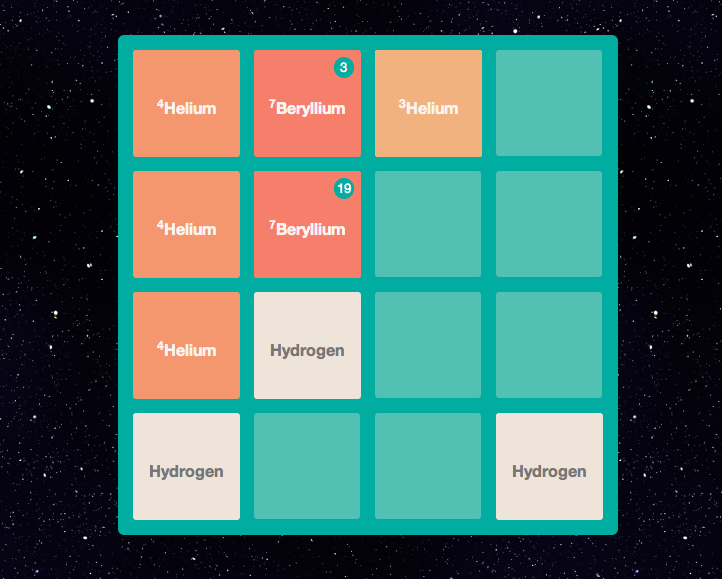
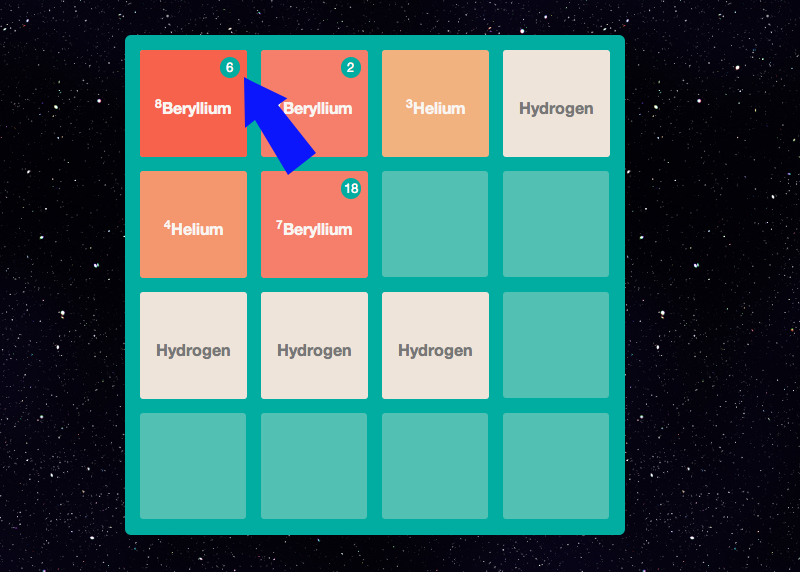
Earlier this week, we took a look at the puzzle game Fe [26], in which you fuse atomic nuclei together and try to produce the isotope iron 56. Today, I’m going to teach you one of the basic moves you’ll have to learn in order to win this game. It’s called the triple alpha process.

Triple Alpha Step One

First, you’ll have to create three helium nuclei, specifically the isotope labeled helium 4. Helium 4 plays a special role in nuclear physics where it is often called the “alpha particle.” If it didn’t have that “alpha” name, I guess we’d be talking about the triple helium process today.

Triple Alpha Step Two

Once you’ve created your helium, fuse two of them together to make beryllium 8. You’ll notice that beryllium 8 is marked with a little, green number. That number indicates that you’ve created an unstable isotope. You have only six turns before it undergoes radioactive decay and turns back into helium.

Triple Alpha Step Three.

Before your beryllium decays, quickly fuse it with your third helium 4 nucleus. This will produce carbon 12. You can relax now. Carbon 12 is stable, and you have plenty of time to figure out what you’re supposed to do with it. You’re now well on your way toward winning Fe [26].

Click here to start playing Fe [26]. Click here to learn about other sciency video games profiled this month here on Planet Pailly.

P.S.: This is the way carbon is actually made in the hearts of stars. Two helium nuclei (or alpha particles) fuse together to make beryllium 8. If a third helium nucleus shows up quickly enough, it can turn that beryllium into carbon; if not, the beryllium will rapidly disintegrate.

P.P.S.: See, Mom, I told you video games can be educational!