Science fiction uses scientific language as a form of artistic expression. With that in mind, today’s post is part of a series here on Planet Pailly called Sciency Words. Every Friday, I’ll bring you a new and interesting scientific word to help us all expand our scientific vocabularies together. Today’s word is:
LOCAL FLUFF
Yes, this is a real science term. No, it has nothing to do with porn.
As you’re probably aware, you live on the planet Earth. Earth is located in the Solar System, and the Solar System is located inside a region of space known as the Local Fluff. Scientists currently estimate this region is roughly 30 light-years across. What’s fluffy about it? Well, it’s a cloud of hydrogen gas slightly denser than the interstellar medium surrounding it.
In a high tech, Science Fiction future, the Local Fluff might become very important. Just as rivers and mountain ranges helped determine the political boundaries of nations here on Earth, gas clouds like the Local Fluff might one day be used to draw the borders between intergalactic space empires.
Our Solar System is located close to the outer edge of the Local Fluff. Alpha Centauri, our nearest neighbor, is just over the border, inside another hydrogen cloud called the G-Cloud (which also has nothing to do with porn). To find out more about the Local Fluff, click here.
Today’s post is part of the Insecure Writer’s Support Group, a blog hop hosted by Alex J. Cavanaugh. It’s a way for insecure writers like myself give each other advice and encouragement. Click here to see a full list of participating blogs.
* * *
Back in July, I took a leap of faith. I switched from a full time job to a part time position, giving myself more time to focus on my twin passions of writing and illustrating. It was a scary moment in my life, despite the financial precautions I took to ensure I wouldn’t end up a homeless beggar on the street corner. Now it’s December, and I’ve learned that this writing/illustrating lifestyle I’ve chosen is harder than I expected, but it’s also more rewarding.
When I took that leap of faith, I imposed several deadlines on myself, but I underestimated how much time I needed to recover from the stress of my old job. I worked in the broadcast news business (and I still do, just on a part time basis). Anyone who’s worked in news will you how demanding it can be, both mentally and physically. It’s taken me the past five months just to become a normal human being again (and I’m not convinced I’m 100% back yet). As a result, I’ve missed most of my deadlines.
The good news is that I also underestimated my financial preparedness, the result of overestimating my living expenses. Going forward, the only factor that remains unaccounted for is the cost of health insurance (the Obamacare website keeps crashing on me). But for the moment, I don’t really have to worry about money. That’s been very reassuring, allowing me to focus on restoring my humanity.
So right now, my writing/illustrating income is zero. I’m way behind schedule for finishing the Tomorrow News Network anthology, and the Obamacare website is super frustrating. And yet, things are going okay. Despite all the problems I’m facing, I’m more committed to my writing than ever. My friends and family tell me I look healthier. I feel better about myself, and I’m optimistic about what will happen in 2014. Taking that leap of faith frightened me, and some of my fears were justified, but now I’m finding that following my dreams is easier than I’d expected.
Today on the Tomorrow News Network website, I’m accepting my first Blog of the Year award! It’s very exciting, and I feel both honored and humbled by this recognition for my short story series. I want to thank my friend and writing buddy, Linda Frindt, for nominating me.
Click here to visit Linda’s blog, and click here to check out my shiny, new award!
Science fiction uses scientific language as a form of artistic expression. With that in mind, today’s post is part of a series here on Planet Pailly called Sciency Words. Every Friday, I’ll bring you a new and interesting scientific word to help us all expand our scientific vocabularies together. Today’s word is:
RECENCY BIAS
Recency bias: (noun) the human tendency to place greater emphasis and importance on recent events rather than events farther back in time. Whenever a piece of good news or bad news seems to overshadow everything that ever happened before, that’s recency bias at work.
You might notice the effects of recency bias on the stock market, where the slight change in the value of a stock today is perceived as more significant than the greater, gradual changes that occurred over the course of a year. You’ll also catch it in political commentaries whenever you hear someone claim that the current President, Congress, etc is the best/worst in history. It can also come up in sports, art, literature… pretty much anything.
You might even encounter recency bias in your own life. I often experience it whenever I have writer’s block. My difficulty composing one stupid sentence for a current writing project somehow convinces me that I suck at writing and at life, despite the fact that I’ve had writer’s block before and despite the fact that I always find a way to get through it.
Of course it is always possible that, when the stock market starts slipping, that it really does mean the economy is about the collapse. It’s also possible that our current political leaders are the best or worst ever, or that the newest rookie player for your favorite sports team really will change the game forever. These things are possible… but kind of unlikely.
So before you jump to conclusions, check yourself for recency bias. Make sure you’re not just thinking about the latest headlines or your most current headache. Just remember to keep things in the context of history.
* * *
Did you already know this word? If so, please share another sciency word in the comments below. That way, we can all keep expanding our sciency vocabularies together!
It often seems like money has been around forever, but it hasn’t. Some ancient human had to invent the concept of money, and the idea has continued evolving ever since. Originally, currency was made from precious metals, and its value was that of the metal itself. Later, someone thought of the idea of paper money, which originally represented a sample of precious metal stored in the national treasury someplace, like a little note saying, “I own a pound of gold.” Now money is its own thing, no longer tied directly to the value of gold or silver, and thanks to credit cards and online banking, even paper money is starting to feel a bit antiquated.
Today, I want to take a look at what money might be like in the future. Here are two videos (essentially advertisements) showing how technology is reinventing the concept of money all over again.
P.S.: One day, perhaps there might be no need for money at all. This is the future envisioned by Star Trek, and it’s a possibility that has fascinated and confused many devoted Trekkies over the years, including myself. Click here to find out more about the Star Trek economy.
Science fiction uses scientific language as a form of artistic expression. With that in mind, today’s post is part of a series here on Planet Pailly called Sciency Words. Every Friday, I’ll bring you a new and interesting scientific word to help us all expand our scientific vocabularies together. Today’s word is:
QUBIT
The spelling of this word drives me bonkers. It’s pronounced “Q-bit.” There’s no need for that “u.” Just replace it with a hyphen, and no one would be confused about the pronunciation. Unfortunately, the spelling “qubit” has been around long enough already that it’s unlikely to change.
Anyway… qubits are the bits of quantum computers. Where a bit in a regular computer stores information as either a 0 or a 1, a qubit takes advantage of the weird and wacky laws of quantum mechanics to store information as a 0, a 1, or as a 0 and 1 at the same time.
To put it another way, regular computers think in terms of yes or no. A quantum computer can think in terms of yes, no, or maybe. This allows quantum computers to do multiple simultaneous calculations, making them much faster than those simple minded, binary code machines we already know and love.
At the moment, quantum computers are still in development, and they’re only useful for specific, highly complex calculations. But sooner or later, these things with all their strange, little qubits will be coming to a desktop near you, and then you’ll all get to share my frustration with this awkwardly spelled word. Presumably by then we’ll also have to learn how to say qubytes, kiloqubytes, megaqubytes, and so on.
* * *
Did you already know this word? If so, please share another sciency word in the comments below. That way, we can all keep expanding our sciency vocabularies together!
Back in July, NASA’s Cassini spacecraft happened to be in perfect alignment with Saturn and the Sun (the technical term for that is syzygy, by the way!). This allowed Cassini to take an amazing snapshot of a Saturnian eclipse. If you haven’t seen this picture yet, you really need to check it out (click on the image below to see a larger, more detailed version).
Click image to see full scale version, courtesy of Astronomy Picture of the Day.
Cassini has taken other pictures of Saturn eclipsing the Sun, but this one is particularly special. Far off in the background, you can see a tiny, blue speck; namely, Earth. If you look closely, you might be able to see the even tinier speck beside it: our beloved Moon. Venus and Mars are also in the photo, meaning that in this one picture you can see half the planets in the Solar System all at once (or almost half, depending on your opinion about Pluto).
But wait, there’s more! If you click on the image and view the full-scale version, you should be able to find at least three of Saturn’s moons. Just below Saturn and slightly to the left, you should see a small, tan-colored moon which I’m guessing is Titan, and there’s another moon nearby that’s almost certainly Enceladus (the geysers give it away). A third moon is located in the upper right, but most of it is in shadow so I can’t guess what its name might be.
We know for a fact that there is life—lots and lots of life—crammed onto that one tiny, blue speck, but we Earthlings might not be alone. According to recent theories, there are four other places in the Solar System that might be able to support life: Mars, Europa (a moon of Jupiter), Titan, and Enceladus. So it’s possible that this picture doesn’t just show a bunch of cool planets and moons. It may also be our first group photo with the Martians, Titanians, and Enceladians. This picture might be the first to show all the life bearing worlds of the Solar System together (or almost all of them—sorry, Europa—we’ll try to squeeze you in next time).
As you can tell, I’ve spent an embarrassingly large amount of time studying this image and thinking about what it means. It’s stuff like this that keeps me from getting too bogged down with earthly concerns. Pictures like this remind me that I’m a citizen of a much bigger, much wider universe. So I want to send a big thank you to the Cassini spacecraft for sending back such an awesome photo!
P.S.: Click here for another cool picture of Earth and the Moon. This one’s close enough that we’re not reduced to a tiny, nearly invisible speck, but still far enough away to show how truly small our planet is. The picture was taken by the MESSINGER spacecraft while on route to Mercury.
Neil Gaiman, author of Coraline, American Gods, and a couple really outstanding episodes of Doctor Who, has some interesting thoughts on Internet piracy. He, along with growing numbers of well-known and well-respected writers, doesn’t think it’s so bad. In fact, Gaiman says piracy might be a good thing.
Science fiction uses scientific language as a form of artistic expression. With that in mind, today’s post is part of a series here on Planet Pailly called Sciency Words. Every Friday, I’ll bring you a new and interesting scientific word to help us all expand our scientific vocabularies together. Today’s word is:
COMPULSATOR
Compulsator: (noun) a device used to collect energy from a low-powered source then release it as a high-powered pulse. The term is short for compensated pulsed alternator.
Think of it like a savings account at a bank. If you deposit a small amount of money each day, at some future point in time you’ll be able to withdraw a large sum of cash for a major purchase. In a similar way, by accumulating small amounts of energy in a compulsator, you’ll be able to generate a huge burst of power later on when you need it.
The most common use for compulsators is in a weapon called a rail gun. The compulsators store energy as inertia in a spinning rotor then release it all at once to fire a projectile. At the moment, rail guns are still experimental, but they—and the compulsators that make them work—will probably be common terms for soldiers fighting in futuristic, Sci-Fi wars.
* * *
Did you already know this word? If so, please share another sciency word in the comments below. That way, we can all keep expanding our sciency vocabularies together!
P.S.: I decided to focus on the term compulsator rather than rail gun today because a) I think the word compulsator is less well known and b) in the future, I suspect engineers will integrate the compulsator into other new weapon technologies besides the rail gun.
P.P.S.: At the moment, I have yet to find an example of a compulsator being used for a peaceful purpose. If anyone knows of one, please share it in the comments below.
Today’s post is part of Indie Life, a blog hop for independent authors hosted by the Indelibles. Click here to see a list of participating blogs.
* * *
They say a picture is worth a thousand words, but your cover art is worth much more than that. Potential readers might not even bother to look at your book (much less buy it) if the cover doesn’t somehow catch their attention. When I first started my indie life journey about two years ago, someone told me that I must hire a professional editor and I must hire a professional illustrator. I chuckled at the time because I am a professional illustrator, or at least a semi-professional illustrator. How hard could it be to do my own cover?
It wasn’t until I sat down with a blank sheet of paper and started thinking about how this one illustration—this one illustration!—could make or break the success of my first book and perhaps my whole career as a writer that I began to freak out. I started sketching, then I stopped and started over, then I stopped and started over again. Normally a project like this would take me a week, two weeks maximum, but this illustration took almost a full year.
Drawing and painting have always been easier for me than writing, but this was worse than any writer’s block I’ve ever experienced. Many times, I wondered if I should give up and hire someone less personally involved in my book to do the cover for me. I knew perfectly well that was the only reason I was struggling. But I kept working on it, and as of this past Sunday I finally finished. Here is the long awaited cover art for Tomorrow News Network: Volume One. Please let me know what you think!
As for the editing, I did hire a professional to help me with that. Even if I were a professional editor, I wouldn’t trust myself to catch all the mistakes in my own manuscript. For that, you need a genuine outsider’s perspective. So far, the editing process has been far less stressful than doing my own cover art. I’m happy to announce that, while I still don’t know the exact date yet, the day my book comes out is tantalizingly close!
P.S.: If you’re in need of an illustrator, my services are now available. Please email me at james.pailly@gmail.com if you’re interested. I promise it won’t take me a full year to do your cover art; I’d only inflict that kind of delay on myself.

 Today’s post is part of the Insecure Writer’s Support Group, a blog hop hosted by Alex J. Cavanaugh. It’s a way for insecure writers like myself give each other advice and encouragement.
 Today’s post is part of Indie Life, a blog hop for independent authors hosted by the Indelibles.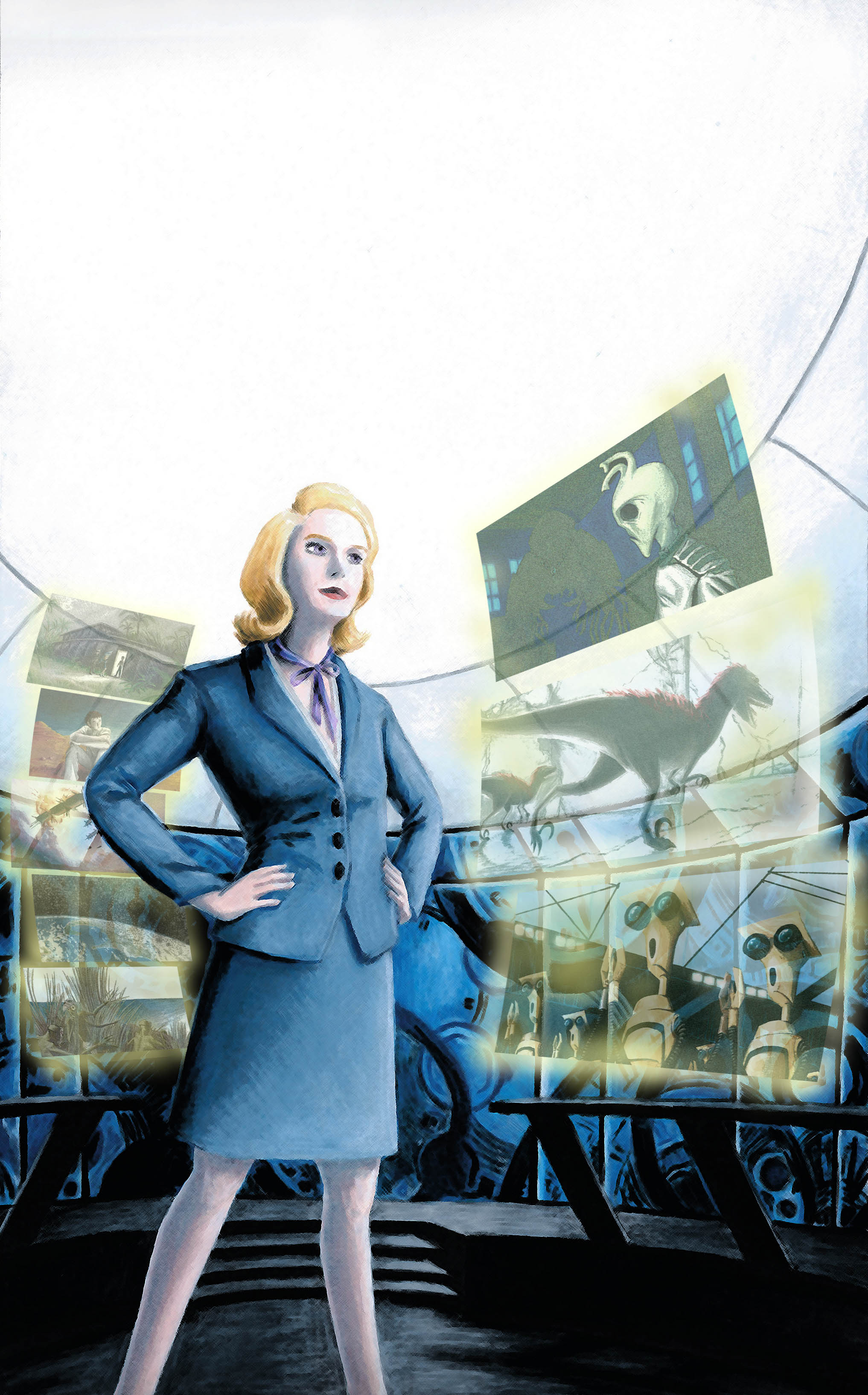
 Planet Pailly