Science Fiction in 2012

Science fiction nerds like me have a lot to be excited about in the new year.  Here’s a short list.

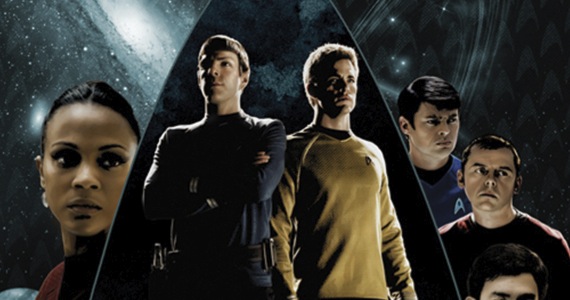
    • Filming begins on the next Star Trek movie, and I’m sure we’ll hear lots of juicy rumors before its release in 2013.
    • The Star Wars movies are returning to theatres, this time in 3D.  The Phantom Menace comes out in February.
    • The movie adaptation of The Hunger Games comes out in March.  It looks like one of those rare and exciting cases where Hollywood decided to stick to the original book as much as possible.
    • Ridley Scott’s Prometheus comes out in June, and looking at the trailer it seems like a prequel to Alien.
  • Doctor Who, Series 7 comes out in the fall.  Matt Smith will continue to play the Eleventh Doctor, and Karen Gillan and Arthur Darvill (Amy and Rory) will make an appearance, but it is not yet clear if they will be the Doctor’s companions through the full series.

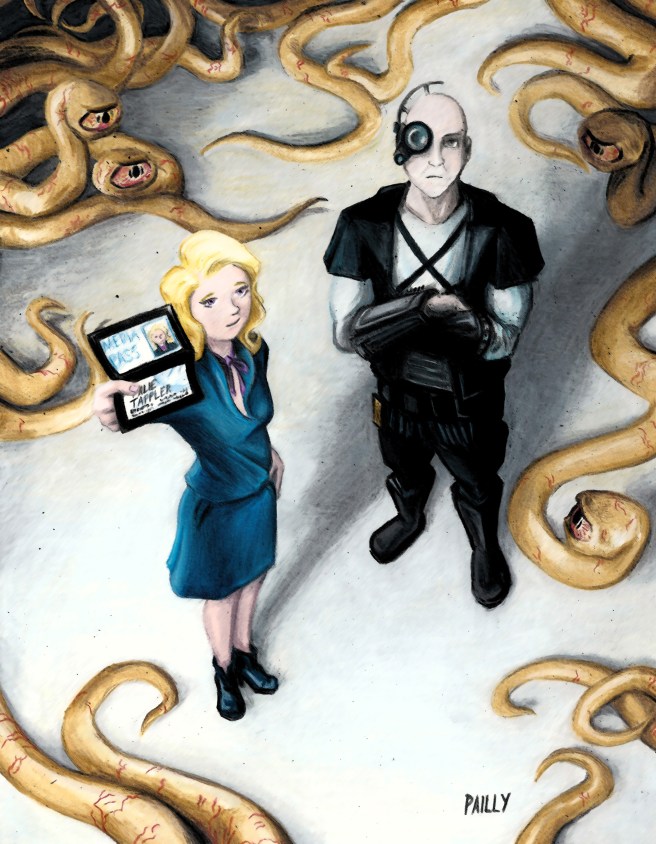
And of course, starting January 9th you’ll be able to read my new short story series, The Tomorrow News Network (click here to visit the website).  Each month, I will post a new story featuring time traveler and journalist Talie Tappler and her cyborg cameraman, Mr. Cognis.  I hope you’ll have as much fun reading about their adventures as I’ve had writing them.
Everybody have a safe and happy 2012.  May the Force be with you, live long and prosper, etc, etc…

Science in 2012

2011 has been a good year.  We’ve discovered lots of new planets, including a few that could be able to support life, found out neutrinos might travel faster than light, and learned that quantum mechanics, the science of atoms and subatomic partials, sometimes works on much larger scales.  As exciting as all that was, next year promises to be even better.

In February, SpaceX will become the first private company to send a spaceship to the International Space Station.  Following NASA’s deep budget cuts in 2010, the private space industry has expanded rapidly.  Privately owned spacecraft are no longer just for tourists; they will also become a taxi service for NASA astronauts.  If all goes well, February’s SpaceX mission will be the first of many.

In August, the largest robotic probe ever sent to another planet will land safely (crosses fingers) on Mars.  The Curiosity rover will search for signs of Martian life, either living or extinct.  Resent studies have shown that Mars is not as barren as we once thought and that it has many of the chemicals and conditions needed for life to develop.  There’s even circumstantial evidence that microscopic life exists there right now.

Lastly, scientists say they will either discover the Higgs Boson by the end of 2012 or prove that it doesn’t exist.  The Higgs Boson is predicted by the standard model of particle physics, but no one has been able to find it.  Soon, they will run out of places to look.  If it turns out the Higgs doesn’t exist than there is something wrong with the standard model, and physicists will have to develop a whole new theory to explain how subatomic particles work.

These are just some of the stories we already know about.  Imagine all the surprises 2012 will bring in addition to the things we’ve scheduled and are able to predict!

Tomorrow: Science Fiction in 2012.

Are Animals Smarter Than You?

Fans of the Hitchhiker’s Guide to the Galaxy already know that humans are only the third most intelligent species on Earth.  Dolphins are the second, and white mice are the first, for obvious reasons.  But what animal is the fourth most intelligent, or the fifth?  Scientists are making progress finding out.

Biologists in Scotland have been studying the songs of sperm whales and believe whales have names, just like we do.  Before they sing, each whale tends to start with a series of tones unique to that whale, as though they’re announcing themselves before they speak.  A possible translation could be something like, “This is Bob.  I noticed some fish over there.  Let’s go get them.”  For more on whale names, click here.

Researchers at the University of Michigan say they’ve found evidence that wasps have the ability to recognize each other’s faces.  If you ask me, all wasps look the same, but apparently individual paper wasps have subtle differences of facial structure and can recognize each other the same way humans do.  This is the first time anyone has discovered human-like behavior in an insect.  For more on wasp facial recognition, click here.

Since we already know humans and chimpanzees are related through evolution, it shouldn’t surprise us too much to learn that they display human-like behavior.  Yet recent research, again in Scotland, has found that they even share some of our feelings about death.  Scientists are a Safari Park observed chimps gathering around the deathbed of a fellow chimp, mourning for it, holding vigils, and caring for the remains after death.  For more on chimpanzee death rituals, click here.

These are not the only examples.  Squid and cuttlefish change colors and may have their own language (click here).  Dolphins, which the Hitchhiker’s Guide already told us are smarter than us, have been observed inventing new tools to help them fish (click here).  Crows make tools and communicate as well, and scientists have also observed them playing practical jokes on each other (click here).

By studying animals and finding similarities between their behavior and ours, we are also learning about human intelligence and how it developed.  Our ancestors surely began in a similar way.  Given time, maybe sperm whales or paper wasps or one of the other species listed here could evolve to our level.  Maybe, on some other planet, they already have.

Dear Higgs Boson

Dear Higgs Boson,

We know you’re there.  We’re very close to finding you.  The standard model of particle physics has predicted your existence for decades, and in every other experiment the standard model’s predictions have been correct.  It’s only a matter of time—less than a year, they say—before your existence is proven as well.

Just recently, some scientists at CERN detected tantalizing new evidence of your existence.  They didn’t observe you, but they did notice the high-energy particles you turned into when you decayed.  They’ll have to repeat the experiment, because those particles might have decayed from something else, but their fancy mathematics is telling them they’ve almost got you.

For scientists, this is all very exciting, but I’m not a scientist.  I’m a science fiction writer, and as a science fiction writer I’m asking you, Higgs Boson, as a personal favor to stay hidden just a little bit longer.  Science fiction depends on the things we don’t know about the universe.  The gaps in our scientific knowledge allow us writers to make stuff up.  Once you’re discovered, analyzed, and understood, we won’t be able to make stuff up about you any more.

It would be even more helpful if it turned out you don’t exist at all.  That would mean the whole standard model is wrong, and we Sci-Fi writers could make up all kinds of crazy, new things.

So come on, Higgs Boson.  Keep being a mystery.

P.S.: Could you please stop calling yourself the “God Particle”?  It’s really pretentious.

Special Announcement – The Tomorrow News Network

Ladies and gentlemen, friends and loyal readers, I am pleased to announce the beginning of my new writing project.

The Tomorrow News Network is a series of short stories featuring time traveler and journalist Talie Tappler.  She arrives at her stories before they begin, knowing in advance exactly what will happen, who will live, and who will die.  As a journalist, she can only observe and, because of her journalist’s code of ethics, cannot interfere.

I have spent most of my career working in TV News, and this series is partially based on my experiences.  At its heart, The Tomorrow News Network is about the real role of journalists.  Should they simply inform the public without commentary and let the people decide (as Fox News and MSNBC do not), or do they have a responsibility to fight against injustice?  To act as the voice of the people challenging those in power?

I hope you will come visit my new website, tomorrownewsnetwork.com, to read these stories.  The first will be posted January 9th, 2012, and a new story will appear each month after that until October.

Moving to Planet KOI-70.04

Last week, NASA scientists announced the discovery of a new planet capable of supporting life (click here to read more about the so-called Christmas Planet).  The planet was found using the Kepler Space Telescope, a telescope specifically built to find planets orbiting other stars.  But this planet was not NASA’s only Christmas gift to astronomers.

The Kepler Space Telescope is also monitoring a planet candidate that could be slightly smaller than Earth.  Up until now, every new planet discovered outside our Solar System has been larger—usually much larger—than Earth.  Even the Christmas Planet is over twice Earth’s size.

While planet KOI-70.04 is unconfirmed, it still shows that we are getting better at finding new planets, even the small ones.  In the very near future, NASA should be able to confirm the existence of truly Earth equivalent planets, with the right size, the right temperature, and the right chemical composition to make life comfortable for us.

For more information on KOI-70.04, click here.  You can also visit the Kepler Space Telescope’s webpage by clicking here.

P.S. In case you were wondering, KOI stands for Kepler Object of Interest, and the numbers presumably represent the 70th star Kepler is watching and the 4th planet candidate discovered in orbit of that star.  Three other planets have already been confirmed in this star system, and the Kepler team is monitoring a fifth planet candidate by the name of KOI-70.05.

P.P.S. If you decide to move to Planet KOI-70.04, bring an air conditioner or lots of fans.  Experts estimate the surface temperature is 600 °C.

Are Plants Smarter Than You?

Everybody’s heard of photosynthesis.  We all learned about it in middle school science, and most of us promptly forgot about it during summer break.  It’s the process where plants use sunlight as an energy source.  Now scientists have discovered photosynthesis is even more complicated than originally thought.

Image courtesy of WP Clipart.

According to an article from Wired News (click here), researchers have discovered that plants use quantum mechanics to maximize the amount of energy they collect from the sun.  Quantum mechanics is the really weird part of physics.  It tells us, among other things, that subatomic particles can exist in more than one place at the same time so long as no one observes them.

When sunlight enters the leaf of a plant, the individual photons exist in more than one place at the same time, traveling in multiple directions through the leaf, letting the plant choose the pathway that suits it best.  Once the plant chooses, it has made an observation in the quantum mechanical sense and the other versions of that photon cease to exist.  The plant consumes the photon, and the process begins again.

In other words, plants use quantum mechanics like an eating utensil.  What a knife and fork are to us, the strangest, most complicated branch of physics is to a plant.  Keeping this in mind, the killer plant from Little Shop of Horrors seems a lot more dangerous.

They say that anyone who claims to understand quantum mechanics is lying.  Humans have been struggling with it for almost a century, and it still doesn’t make any sense.  But plants get it, and they use it.  They probably worked it out millions of years ago.  So what else do they know that we don’t?

Sci Friday

Why is it that some people like Sci-Fi movies but won’t read science fiction books?  And how much does NASA really cost US taxpayers?  The first two links this week focus on these two questions.

The Christmas Planet

Yesterday (December 6, 2011), NASA announced the discovery of yet another planet outside our Solar System that might be able to support life.  Its name is Kepler 22 b.  Along with Gliese 581 d and HD 85512 b, this brings the total to three.

Infographic courtesy of NASA/Ames/JPL-Caltech

We do not know for sure that this new planet has life.  We don’t even know if it has liquid water or an oxygen nitrogen atmosphere.  We only know that it’s in the Goldilocks Zone of its parent star, the region where it’s not too hot and not too cold but just right for organic life to develop.

William Borucki, chief scientist for the team that discovered this planet, has been quoted saying, “It’s a great gift.  We consider this sort of our Christmas planet.”  The bigger news, at least in my opinion, is that his team has a list of over 2,000 more possible planets.  Even if only half are confirmed, that’s still a lot of new worlds to study.

As for what life might exist on the Christmas Planet, even if its biochemistry is similar to ours it may not look human.  It may look more like this octopus that recently crawled out of the water and went for a brief stroll on land.

For more information on Kepler 22 b, the “Christmas Planet,” click here.  For artist representations of various planets discovered by the Kepler Mission, click here.  For more on octopi walking on land, click here.