Indie Life: BUY MY BOOK!

IndieLife7Today’s post is part of Indie Life, a blog hop for independent authors hosted by the Indelibles.  Click here to see a list of participating blogs.

* * *

Very soon, I’ll have my first indie book published, but I don’t want to become one of those people.  You know who I’m talking about.  The people who go on the Internet, log into Facebook or Twitter, and start screaming at the top of their virtual lungs, “BUY MY BOOK!  BUY MY BOOK!  PLEASE FOR THE LOVE OF GOD BUY MY BOOK!!!”

First of all, those people are annoying.  Second, the “BUY MY BOOK!” marketing strategy doesn’t seem to work.  I’ve gotten plenty of advice on how to market an indie book, and it sounds like the only truly effective method is to trust word of mouth.  If you’ve written something that is really good, people will tell their friends, who then tell their friends, and so forth until suddenly you start making lots of money.

It sounds to me kind of like the chain reaction that takes place inside nuclear bombs.  One neutron collides with a single uranium atom, which causes the uranium atom to release more neutrons, which then collide with more uranium atoms, until you get a massive explosion complete with a mushroom cloud.

So my question to all you indie authors participating in Indie Life today is this: how do you get that first neutron to hit that first uranium atom?


Robo-Snake

Bad news, everyone.  Our worst nightmare is about to come true.  No, I don’t mean the one where you show up to work/school with no clothes on.  I mean that other one.  The one full of robotic super snakes.  Soon, those robo-snakes will be real.

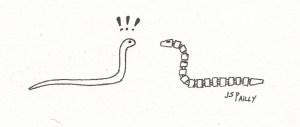
Snake meets Robo-Snake
Snake meets robo-snake.

They’re designing these things for the purpose of exploration.  The European Space Agency wants future Mars rovers to bring little, robotic snake companions.  These robo-snakes could slither around on the Martian surface, crawling into those tight spaces rovers just can’t go.

But I think we all know what’s going to happen.  One day, when the robots rise up against us to overthrow humanity, we’ll see swarms of robo-snakes coming at us.  Thanks, European Space Agency.

P.S.: As if robotic snakes weren’t bad enough, scientists are also working on a robotic octopus.  Click here to read about that.

IWSG: What Writers Can Learn from Uranium

InsecureWritersSupportGroupToday’s post is part of the Insecure Writer’s Support Group, a blog hop hosted by Alex J. Cavanaugh.  It’s a way for insecure writers like myself give each other advice and encouragement.  Click here to see a full list of participating blogs.

* * *

Yesterday, I wrote a brief post about the work of Pierre and Marie Curie, the famous physicists who helped determine the true nature of radiation and radioactive elements like uranium.  In my life as a writer, I often find my roll models among great scientists rather than great writers, and the Curies are no exception.

The Curies had a goal: to figure out what was so special about uranium.  This goal became the obsession of their lives, and they sacrificed a lot to achieve it.  As they worked, the Curies made many startling discoveries, such as the discovery that uranium is not the only radioactive element.  In fact, among all the radioactive elements they studied, they found that uranium was one of the least radioactive.  It’s also thanks in part to the Curies, who in their ignorance touched and handled samples of uranium, polonium, and radium with their bare hands, and who kept these things in their home, that we now know how dangerous radiation can be.

As a writer, I have to stick to my goals just as much as the Curies stuck to theirs.  I’ve had to make my own sacrifices, and where the Curies surrounded themselves with radioactive samples, I surround myself with notebooks, dictionaries, and thesauri.  And just as the Curies’ research led to discoveries they never expected, my writing has led me in directions I never thought I would go.

P.S.: Hopefully nothing about my writing is as deadly as prolonged radiation exposure, but I have developed at least one writing related illness: carpel tunnel syndrome.


Don’t Try This at Home

So here’s a fun fact.  If you close your eyes and hold a radioactive substance up to your eyelid, you’ll see tiny flashes of light.  Pretty cool, huh?  According to Uncertainty, a book about the history of quantum mechanics, Pierre and Marie Curie were the first to observe this phenomenon, using a previously undiscovered element that they named radium.

These flashes of light, along with other experiments and observations, helped the Curies figure out what exactly radiation is and why it happens.  By studying and handling radioactive substances, the Curies also helped us determine the true structure of the atom, with its tightly packed nucleus and cloud of surrounding electrons.

They eventually won the Nobel Prize for their work, but their achievement came with a price.  Marie died from radiation exposure, and Pierre probably would have too if he hadn’t died in a street accident first.  It’s thanks in part to the Curies that we now know how dangerous radiation can be.  So don’t try this at home!

Do Phasers Recoil?

You’re probably familiar with Newton’s third law of motion: every action has an equal and opposite reaction.  This is evident in firearms.  Whenever a bullet is propelled forward, the weapon recoils backward.  But what about those futuristic energy weapons you see in science fiction?  The blasters in Star Wars appear to recoil; the phasers on Star Trek do not.  Which is more realistic?

While the kind of energy weapon we see in science fiction is far beyond our current technology, several other Sci-Fi-like weapons do already exist or are in development.  Take for example the railgun.  Rather than use a chemical explosion like gunpowder or a mechanical force like a spring or hammer to fire a projectile, railguns use high powered magnetic fields to accelerate a metal slug to an enormous speed.  By the time that slug exits the barrel of the gun, it’s traveling so fast it can shoot straight through solid concrete walls.

But even though railguns don’t experience the same mechanical recoil as traditional firearms, they do experience recoil of a different kind.  Think about what happens when you try to press two refrigerator magnets together.  They push against each other.  The magnets inside a railgun are exponentially more powerful than the ones on your refrigerator, so the forces at work are much stronger.  Also, depending on how the magnets are arranged inside the gun, the magnetic recoil tends to push outward rather than to cause the gun to kickback.

It’s amazing this magnetic recoil doesn’t cause railguns to explode, flinging shrapnel in all directions with that same devastating force that punches holes in concrete walls.  According to Tom Boucher, the Navy’s test director for their experimental railguns, despite the extremely sturdy design on the Navy’s railgun prototype “… if we don’t carefully manage [the current in the railgun], it will still come apart.  We have huge amounts of forces we’re dealing with here.”

So should phasers and other futuristic energy weapons have recoil?  I’d say yes, but not necessarily in the same way as a Colt .45 or an AK-47.  Perhaps they have magnetic recoil, like a railgun.  Or perhaps, if the weapon uses an energy source beyond our modern science, the recoil manifests itself in some other way that science has yet to understand.  But however phasers and blasters and other Sci-Fi weapons are supposed to work, they must still obey Newton’s third law.

Links:

Click here for more from Tom Boucher and a demonstration of the U.S. Navy’s railgun prototype on YouTube.

Click here for “Recoil in Electromagnetic Railguns,” a scientific article from the Third Symposium on Electromagnetic Launch Technology.

The Office of Planetary Protection

I have said before that one day science fiction won’t be science fiction anymore; it will just be fiction.  To some degree, we already live in a sci-fi world.  Look at all the diseases we can now cure, or look at the International Space Station, or just look at everything our cell phones can do.  Today, we’re going to take a look at something else that may sound like science fiction but is in fact 100% real: the Office of Planetary Protection.

The Office of Planetary Protection is sort of like the Environmental Protection Agency for the Solar System.  Its job is to ensure that NASA doesn’t violate the Outer Space Treaty of 1967, which stipulates among other things that any probe sent to another planet must not contaminate that planet with Earth-born bacteria.  The point of this is not only to protect alien ecosystems (if they exist) but also to ensure that if we do discover life on another planet, we can be certain it’s genuine alien life and not something that stowed away on one of our own space vehicles.

Take Mars as an example.  While it’s clear there isn’t anything like deer or grizzly bears on Mars, or even anything as small as a mouse or insect, there could be native Martian bacteria.  These microscopic organisms might live in areas like Newton Crater, where scientists have observed what appears to be liquid water seeping through the soil.  This water might be enough to support an entire ecosystem of microorganisms.

The Planetary Protection Office has another job as well: protecting us from any life forms that might threaten our own ecosystem.  Many nations, including the United States, are planning “sample return missions,” meaning they want to send a spacecraft to another world, have it collect samples, and send those samples back to Earth for further analysis in a laboratory.  Obviously we want to avoid an outbreak of alien bacteria similar to what happened in Michael Crichton’s The Andromeda Strain.  The Planetary Protection Office will make sure that doesn’t happen.

But just as the EPA is the source of a lot of controversy, so too is the Office of Planetary Protection.  Some scientists complain that planetary protection rules are making space exploration prohibitively expensive.  Sending a probe to Mars is costly enough without having to pay so much extra to sterilize every single delicate, mechanical component.  Given the current state of the economy and the current state of NASA’s budget, some say we shouldn’t waste money protecting alien ecosystems that might not even exist.  There are also questions about how effective the Planetary Protection Office really is given the fact that some of the Curiosity rover’s tools may have been contaminated before its launch in 2011.

Dr. Catharine Conley, the person currently in charge of NASA’s Planetary Protection Office, at least has a sense of humor about her work.  She owns a pair of Ray-Ban sunglasses, just like Will Smith from Men in Black.  She got them as a gift her first day on the job.  Despite the controversies, I feel safer knowing she’s there, keeping planet Earth safe from alien bacteria and keeping the alien bacteria safe from us.

Voyager 1 Leaves the Solar System… For Realz

You may have heard at some point in the past year that the spacecraft Voyager 1 has left the Solar System.  You may have been confused when you heard it left the Solar System again a week later, and again a month after that, and then again and again and again.  They’ve made the announcement many times, and retracted it many times as well, but this time NASA scientists are absolutely at least 98.9% positively certain Voyager really has left the Solar System.

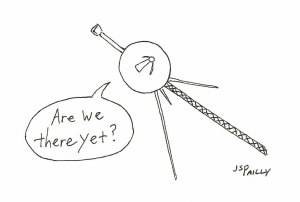
Voyager 1

It’s kind of hard to tell when you’ve left the Solar System because no one’s ever done it before, so no one knows where the signpost is.  Finding that signpost is made more difficult by the fact that some of Voyager 1’s instruments don’t work anymore (Voyager 1 was launched in 1977).

The border between the Solar System and interstellar space is called the heliopause, and it’s the point where the Sun’s radiation gives way to the radiation of the rest of the galaxy.  Determining the exact location of the heliopause may be extra important for science fiction writers.  Just as rivers and mountain ranges once determined the political boundaries of nations on Earth, the heliopause may determine the political boundaries of human territory in a Sci-Fi future.

For more information on Voyager 1’s continuing mission in interstellar space, click here.

P.S.: Voyager 2 is getting close to the heliopause as well.  Maybe in a few years, it will follow in its sister’s footsteps.

Indie Life: Advice from Grandma Pailly

IndieLife7Today’s post is part of Indie Life, a blog hop for independent authors hosted by the Indelibles.  Click here to see a list of participating blogs.

* * *

Being an indie writer is tough, and it’s often made tougher by the insensitive comments of others.  Comments like, “Oh, so you aren’t really published.”  We’d all like to believe that what other people think doesn’t matter, but deep down we know it does.

So I’d like to share a piece of advice that my grandmother once gave me.  It’s something to remember on those days when some unthinking $&#@! gets under your skin.  Grandma Pailly told me that it does matter what other people think, but only certain people—not everyone—and you get to decide which people they are.

So choose carefully whose opinion matters to you.  It’s probably not that random guy from the Internet who bashed your writing or that snooty editor from BIG NAME publishing house.  For me, it’s a small circle of friends and family… especially, of course, my grandmother.

So who is it for you?


IWSG: Three Ridiculous Cures for Writer’s Block

InsecureWritersSupportGroupToday’s post is part of the Insecure Writer’s Support Group, a blog hop hosted by Alex J. Cavanaugh.  It’s a way for insecure writers like myself give each other advice and encouragement.  Click here to see a full list of participating blogs.

* * *

Last month, I experienced what I like to call the Great Writer’s Block Crisis of August.  I wasted a lot of time.  I accomplished painfully little writing or in fact anything else.  The cause of this writer’s block crisis is something that I’d like to keep private between myself and my muse, but since I know many other writers struggle with writer’s block I thought I’d share a few of the strange “cures” I’ve discovered over the years.

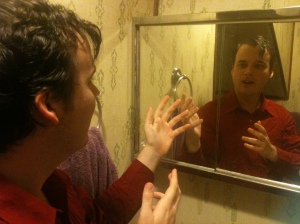
I picked up one cure from a book called The Art of War for Writers by James Scott Bell.  In it, Bell tells a story about Ray Bradbury when he was writing the screenplay adaptation of Moby Dick.  At one point, when Bradbury suffered from writer’s block, he got up, looked in a mirror, and said, “Behold!  Herman Melville!”  I’ve tried this myself, staring into a mirror and saying, “Behold!  Isaac Asimov! or “Behold!  Frank Herbert!”  I sometimes let my beard grow out a little to help with the illusion.  It feels silly doing this, but it helps me loosen up so I can write, and it’s a subtle reminder that my favorite authors (Asimov, Herbert, and of course Ray Bradbury) struggled with writer’s block just as I do.
IMG_1048

Another writer’s block cure I discovered, purely by accident, is alphabet soup.  One day, after a week’s worth of feverish writing, I felt like every single thought in my brain had drained out and poured all over the page.  I felt empty, both mentally and physically… physically empty in the sense that I was suddenly very, very hungry.  As I ate a bowl of alphabet soup (the only option available that day), I felt not only like I was getting the food I needed but also literally refilling myself with the raw materials of writing: the alphabet.  I got right back to writing, and I’ve kept a few cans of alphabet soup in my cupboard ever since.

IMG_1042

The final completely ridiculous writer’s block cure I want to share came to me partly because of my other work as an illustrator.  For a recent short story I wrote set on the lost island of Atlantis, I also drew an illustration of two Atlantians, using toga costumes as reference.  One day, while blocked, I decided to put one of the costumes on and wear it while writing.  All of a sudden, I no longer felt like a 21st Century American Sci-Fi writer but an ancient Atlantian recounting the tale of my own people.  By the time I changed back into normal clothes, I’d written several thousand words and plugged a few big plot holes in my story.

IMG_1045

Of course all these ideas are silly.  Maybe that’s the reason they work.  Writer’s block is a psychological problem.  It happens because you’re thinking too hard, taking yourself and your writing too seriously.  The only way to cure that is to do something ridiculous, to loosen up your imagination and free yourself to see your story from a fresh perspective.

So how do you deal with writer’s block?

P.S.: If all of these ideas fail, I have one last cure.  I write a letter to my muse, apologizing for the mistakes I’ve made as a writer and begging her to forgive me.  If my letter is sincere, she usually takes pity on me and helps me out.  This is how I got out of my writer’s block crisis in August.

Three Reasons NOT to be an Astronaut

Regular readers of my blog know how desperately I want to live on the Moon or Mars or at least get to go to space once in my lifetime.  It might even be fun to have a career in space exploration, but there are some things about being an astronaut that sound… less than dignified.  Here are a few reason not to be an astronaut.

  • No shower.  For decades, NASA and other space agencies have struggled to figure out how to build a shower that works in space.  In zero gravity, water likes to form big, liquid globs that drift aimlessly around the room.  Skylab had a shower of sorts, as did Russia’s Mir space station, but the current International Space Station has no shower, mainly because every drop of water on the ISS has to be strictly rationed.  The best astronauts can hope for is a kind of sponge bath using a washcloth and a tiny bag of soapy water.
  • No laundry.  This is similar to the no shower problem.  Water just doesn’t cooperate, and there isn’t enough of it anyway.  Most astronauts have to wear the same clothes and the same underwear for days on end.  All their dirty laundry is then dumped into space with the rest of the garbage (and incinerates when it hits the planet’s atmosphere), and fresh clothing is sent up from Earth.
  • The toilet.  I was once told astronauts have to wear diapers because there’s no toilet in space.  Fortunately, this isn’t true, but the toilet on the International Space Station is not what I’d call ideal, and apparently “mistakes” have been made.  Just watch the video.

All that being said, every great explorer has had to make some sacrifices and endure certain hardships.  I’m sure many suffered far worse things than dirty laundry and no working shower.  If I’m ever given the opportunity, I’d still go to space.  I think I’d rather be a space tourist than an actual astronaut, though.  To those astronauts who are not only boldly going where no one’s gone before but are bravely sacrificing many of the creature comforts we Earthlings take for granted… I salute you.