My Favorite Moon: Io

Some of you may remember a post I did awhile back declaring Europa to be my favorite moon.  It’s a beautiful and mysterious world, a world that may have an incredible secret hidden beneath its icy crust.  Europa frequently tops the list of most likely places where we might find alien life.

But as I’ve learned more about the Solar System, I’ve developed a deeper affection for another moon, one of Europa’s neighbors, a world that is neither beautiful nor likely to support life.  I’m talking about Io.

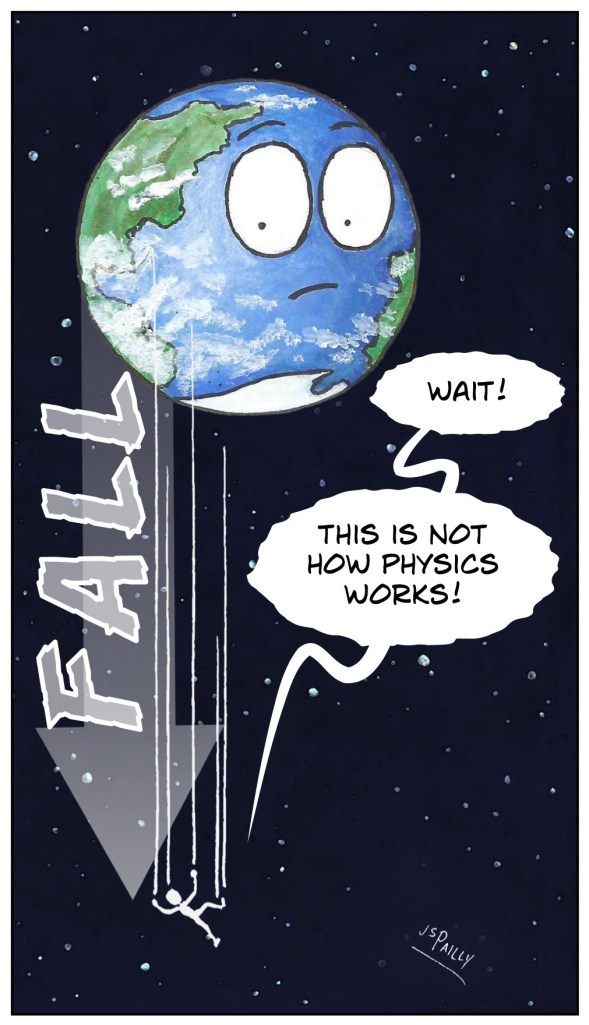
Io is the innermost of Jupiter’s four big moons (Io, Europa, Ganymede, and Callisto).  As such, it gets pushed and pulled around pretty hard. Between Jupiter’s enormous gravity and the combined gravitational forces of the other three Galilean moons, it’s enough pushing and pulling to make anyone queasy.  And Io is a notoriously queasy planetoid.

Due to tidal forces, Io’s sulfur-rich interior is constantly boiling and churning.  And Io keeps literally spewing out its guts, making it the most volcanically active object in the whole Solar System.

Like Venus, my favorite planet, Io is a great chemistry professor, especially when it comes to sulfur chemistry.  Io’s also a pretty decent physics professor.  While most of the sulfur from Io’s volcanic eruptions settles back onto the moon’s surface, plenty of it escapes into space. The result: crazy dangerous games of particle physics in the vicinity of Jupiter.

Io’s ionized sulfur has a lot to do with controlling the intense radio emissions coming from Jupiter.  It’s also a major factor contributing to Jupiter’s insanely dangerous (to both humans and our technology) radiation environment. We recently learned that Jupiter has a third magnetic pole, located near the planet’s equator; while I haven’t read anything yet to back me up on this, I have a feeling Io is somehow responsible for that.

And lastly, Io’s ionized sulfur is partially (mainly?) responsible for the magnificent auroras that have been observed on Jupiter. And that’s my favorite bit about my favorite moon.  I love the idea that Io—the ugliest ugly duckling in the Solar System—plays such a crucial role in creating something beautiful.

But of course picking a favorite anything is a purely subjective thing.  Do you have a favorite moon?  If so, what is it?  Please share in the comments below!

I collect stamps now. Stamp collecting is cool.

Well, I cannot deny the truth any longer.  I’m a stamp collector.  Or at least I am a person who is in possession of a stamp collection.  So how did this happen?

It started with those “Pluto: Not Yet Explored” and “Pluto: Explored!” stamps.  Those particular stamps have an interesting history, which I wrote about in a previous post.

I bought the “Views of Our Planets” stamps at the same time as the “Pluto: Explored!” set.  And then just recently, I saw some Star Trek stamps at the post office.  Naturally, I had to get them.  And the nice man at the register mentioned they had commemorative Sally Ride stamps as well.  Naturally, I had to get those too.  What kind of space enthusiast would I be if I didn’t?

To be clear, I originally meant to use these stamps as stamps.  You know, for postage. Mainly for paying bills.  I wasn’t looking to start a new hobby. But I figured what’s the harm in buying an extra sheet of Pluto stamps to keep, just for fun?  Or an extra sheet of planets?  Or now an extra sheet of Star Trek and Sally Ride?  It’s not like I’m sinking that much money into stamp collecting.

Fast forward to me ten years from now when I have huge albums full of space and Sci-Fi stamps.

My Favorite Planet: Venus

I’m thinking of doing a few of these kinds of posts, if people are into it: my favorite planet, my favorite moon, my favorite asteroid… that sort of thing. Today I’d like to tell you a little about Venus, my favorite planet in the Solar System and also the best chemistry teacher I’ve ever had.

Venus has been my favorite planet for a long time now.  I used to say to people, “It’s because Venus has the most personality.  It’s the personality of a serial killer, but still… so much personality!”

It’s true that Venus is excessively, unreasonably, incomprehensibly hostile toward life.  I mean, all the planets are dangerous (even Earth is a dangerous place in its own ways), but if you ever go to Venus, Venus will try to kill you at least a dozen different ways before you touch the ground.  And when your crushed and crispy remains do reach the ground, Venus will try to kill you again in at least a dozen more ways.

No other planet is so creative and so gleefully enthusiastic about murder.  As a science fiction writer, one of my goals in life is to set a novel on Venus or a Venus-like planet, because no other setting makes for such a deadly antagonist.

But upon further reflection, I think there’s a better reason why Venus holds such a special place in my heart.  I’ve done a lot of space-related research over the years.  It’s all part of my ongoing quest to become a better science fiction writer.  Venus was the first planet to really challenge me intellectually.

Why is Venus so deadly?  In many ways, Venus is Earth’s twin.  The two planets are about the same size, they have almost the same surface gravity, and their chemical compositions are similar. Venus is slightly closer to the Sun, but it’s still within our Solar System’s habitable zone.  So what gives?

It was hard work getting the kind of answers I was looking for.  Venus forced me to learn a lot of new things.  In particular, I had to learn more about chemistry, a subject that I despised in school and had really hoped I could avoid.  But in struggling to understand Venus’s sulfur chemistry, and later its carbon chemistry, I was rewarded not only with a deeper understanding of one planet but of how planets in general are put together, and how they each end up with their own distinct “personalities.”

Picking a favorite anything is obviously a subjective thing. For me, studying Venus was an eye-opening experience in ways I never would have expected.  For that, I’m forever grateful to the planet Venus, and Venus will always be my favorite planet.

So what’s your favorite planet?  If you say “Earth, because I live there,” I’m going to be a little disappointed.  But whatever your favorite planet is, and whatever your reasons for that, please share in the comments below!

Falling Off the Face of the Earth

Sorry, everyone!  Didn’t mean to fall off the face of the Earth like that last week, but some stuff came up in my personal life.  Nothing serious.  Nothing alarming.  Just some stuff that required my attention and kept me away from researching, writing, and drawing.

I have a pretty interesting Sciency Words post in the works for this Friday.  I also have big plans for next week’s blog posts, including (fingers crossed, I hope this comes together right) a new short story.

Stay tuned!

Alchemy: A Blemish on Isaac Newton’s Reputation

I’ve been thinking a lot about Isaac Newton lately. That’s because of this article from the Washington Post, which fellow writer and all around awesome person Jennifer Shelby recently shared on her blog.  The article wasn’t actually about Newton.  It was about alchemy.

The thing is, Newton happened to be a famous and highly accomplished alchemist (no, that’s the wrong way to say it).

The thing is, Newton happened to be a secret but highly skilled alchemist (no, that’s not quite right either).

The thing is, Newton tried really, really hard to be an alchemist.  That’s right. Newton was searching for the magical philosopher’s stone many centuries before Lord Voldemort and Harry Potter came along.  Obviously Newton never found it… unless there are more of Newton’s waste books out there that have yet to be uncovered and decoded (feel free to use that as a writing prompt, if you like).

Newton is famous for many things.  He used prisms to figure out how light works, and he was half right when he asserted that light is composed of tiny particles rather than waves.  Newton applied math to the mysteries of gravitation, and he showed that moons and falling apples have something important in common.  He also invented calculus (unless he stole the idea from someone else).

This alchemy stuff is generally seen as a blemish on Newton’s reputation as a scientist.  But the way I see it, the fact that Newton tried his hand at alchemy—along with many, many other things that never panned out for him—is one of the reasons Newton was such an admirable human being.

He tried stuff.  All sorts of stuff.  Anything and everything that caught his interest.  Most of it turned out to be a waste of his time, but a handful of Newton’s curious ideas led him to the scientific breakthroughs that made his reputation and his career, and ultimately secured his legacy as a great scientist.

So at the risk of repeating myself from Monday’s post, the lesson for today is: go try stuff.  Find out what doesn’t work, and figure out what does, and then… well, see where your discoveries might lead you.

P.S.: And speaking of Harry Potter, stay tuned for a special Harry Potter themed episode of Sciency Words this coming Friday!

Art in the Wild: Mr. Sun

Of late, I’ve felt that I need to push myself a little harder with my art.  I’ve been doing lots and lots of drawings, so it’s not that I’ve gotten lazy; rather, I feel like I’ve gotten complacent.  I feel like I keep doing the same kind of drawing over and over again, without really challenging myself or stretching my artistic skills.

So to shake up my routine, I decided to take some of my art supplies “out into the wild,” so to speak.  Or at least I took them out of my art studio and brought them with me to my day job.  My hope was that I could draw something based on first hand observation, rather than from photo references, mannequins and maquettes, or pure imagination.

A year or two ago, a thoughtful friend left this Mr. Sun figurine on my desk.  Given the history of this blog, that seemed like a good place for me to start.

One of the challenges of drawing from first hand observation is that your mind plays tricks on you.  You have to get past what your mind thinks you should see and draw what your eyes actually see. I had a really tough time with this drawing because my mind kept insisting there should not be highlights and cast shadows on the Sun; the Sun is supposed to be a light source!

It’s been a long time since I’ve taken my art out of the studio like this.  I think it was good practice artistically speaking, and a surprisingly difficult mental challenge as well.  I plan to do a whole lot more of this.  Let me know in the comments if you’d like to see more of the results (good, bad, or ugly).

I love drawing almost as much as I love writing.  But when you love something, there’s a real danger of settling into a comfort zone, becoming complacent, and getting bored. And then you may start to fall out of love with that thing (or maybe even that person) that you loved so much.

So whatever it is you love, I hope you’ll keep pushing yourself, take some risks, and challenge yourself to do something more with it.

… And We’re Back!

After almost a full month off, I’m ready to get back to regular blogging.  I needed the time off to fix a badly broken manuscript.  It’s been dull, tedious work, and there’s still more dull and tedious work to be done.

But I’m making progress.  The revised manuscript is coming together nicely, I think. Lessons have been learned. Improvements have been made, and a lot of superfluous text has been cut.  I’m confident that, in the end, everything will turn out okay.

Also during my time off:

  • It turned out there was still one last real life problem that needed to be punched in the face. That’s now taken care of.
  • I spent a lot of time re-reading some old favorite novels and re-watching some old episodes of Star Trek—the kind of stuff that inspires me to keep writing.
  • I also spent a lot of time having long, difficult conversations with friends about my writing. Why did I get into writing in the first place?  Do I really want to keep doing this?  These sorts of questions were a lot harder to answer than I would have expected.
  • I had a paracosmic experience involving my muse, but I’ll save that for Wednesday’s meeting of the Insecure Writer’s Support Group.

But the most important thing, at least in relation to this blog, is that I managed to catch up on some of my research. There’s a lot of cool space stuff I want to talk about.  We’ll start digging into that in Friday’s episode of Sciency Words.

Stay tuned!

A System of Plenty

I’m still off on my blogging break, but I saw this really awesome post yesterday and wanted to share. You can call it science or you can call it science fiction. Either way, it’s a really cool concept to think about, so please enjoy.

Mekhi Dhesi's avatarRationalising The Universe

Hello RTU readers. So today I’ll be writing about an idea that combines two of my favourite ideas in astrophysics; exoplanets and black holes. This post comes at an exciting time as I know now that from October I will be starting a PhD in Astrophysics at University College London, during which my research will involve theoretically modelling exoplanetary processes. Exoplanetary science has exploded over the last two decades, where we have gone from not conclusively knowing that other planets or planetary systems exist, to having over 3,786 confirmed planets in 2,834 systems, with 629 systems having more than one planet. It is has been one of those paradigm shifts where our perspective has managed to zoom out a level further, leaving us ever more humble with regards to our place and importance in this universe.

image_5733-ExoplanetsPhoto Credit: NASA

From these numbers, our characterisation of other stars and some nifty extrapolations…

View original post 1,095 more words

Reluctant Blogging Break

I have decided, reluctantly, that I need to take some time off of regular blogging. There’s just too much work I need to do with my manuscript.  But I promise I will be back as soon as I can.  There is, after all, some exciting Mars news that just came out, and I’m eager to dig into the research behind the headlines.