A Brave New Blog

Hello, friends, and welcome back to Planet Pailly!  I’ve spent the last two or three weeks redesigning this website, and I’m pretty pleased with the results.  Today, I’d like to give you a brief tour of what’s changed.

Firstly, I’d like to draw your attention to the menu bar at the top of the page.  If you click on “About J.S. Pailly,” you’ll be taken to an article called “Three Things You Might Want to Know About J.S. Pailly.”  In the future, that article may be expanded to cover four things, or five things, or maybe even six things!  But three things seems like enough for now.

You’ll also notice that I’ve added a contact form, which you can also access from the menu bar at the top.  It was recently brought to my attention that I didn’t have any sort of contact form for people who needed to get in touch with me directly.  Now I do.

Over on the right hand side of the screen, you’ll see some new posters promoting my professional writing and illustration work.  Clicking on the Tomorrow News Network poster will currently take you straight to Amazon, where you can buy the first book of the Tomorrow News Network series.  That will eventually change.  The plan is for the T.N.N. poster to take you to the T.N.N. website, but I need to finish redesigning that website first.

Next, you’ll see a poster advertising the Planet Pailly store on RedBubble.  Clicking on that will take you to my store, where you can look at some of my art and buy prints, T-shirts, notebooks, etc.  I’ll be adding more art to my RedBubble store soon.

Oh, and the “Buy Me a Coffee” link is also there, for anybody who’s feeling a little generous.

I think that pretty much sums up the changes to this blog.  I hope you like it.  And now regular blogging shall resume.  I’ll have an Insecure Writer’s Support Group post on Wednesday, and then on Friday we’ll get back to talking about science and outer space.  See you soon, friends!

P.S.: For anybody who might be curious, my new WordPress theme is called “Penscratch 2.”
The Evolution of a Blog

Hello, friends!

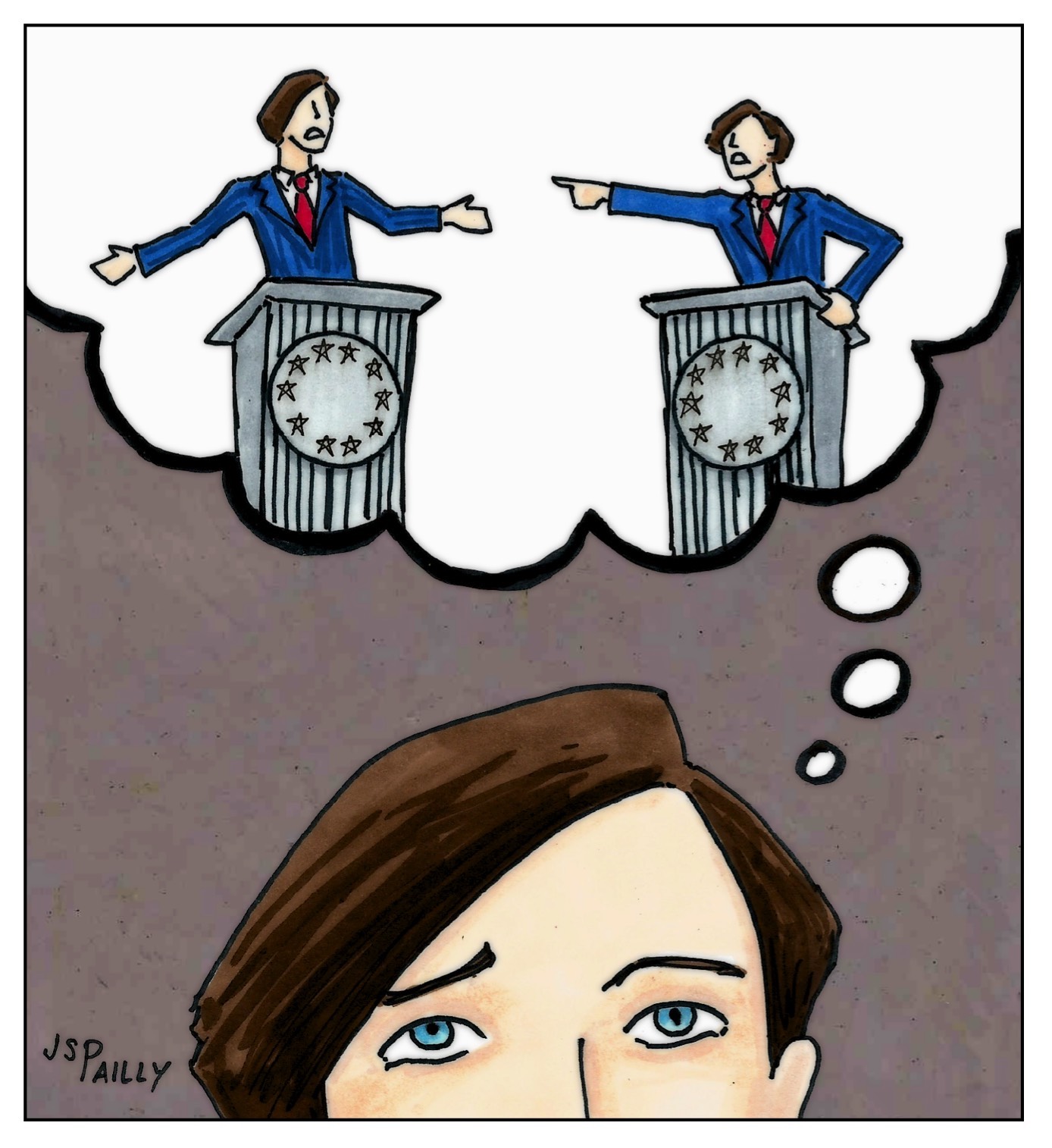
Over the last few weeks, a debate has been taking place inside my head.  And the subject of that debate has been: what do I want to do with this blog?

Don’t worry, this blog isn’t going anywhere.  I’ve just felt for a while now that some changes need to be made.  And this weekend, I finally came to a decision about what, specifically, those changes ought to be.

First, I want to thank everybody for the feedback I got on my recent “Looking for Some Feedback” post.  That helped a lot!  The general consensus seems to be that the way I’ve been citing my sources (embedding hyperlinks in the body of my posts) is perfectly fine.  A few people offered suggestions, though, on how to make those hyperlinks stand out a bit better.  I may also start adding a “learn more” section to the bottom of some blog posts, when it feels appropriate.

Secondly, I’ve been a bit frustrated with some of the changes WordPress has made in the last few years.  I’ve had to find awkward workarounds to let me keep doing some of the things I do in my blog posts.  But over the weekend, I found a new theme that will (I hope) be a bit easier for me to work with.  Given past experience, though, I know that switching WordPress themes often involves a period of teething and troubleshooting.  Things might look a little weird for a while.  Sorry in advance.

And lastly… Sciency Words.  This was the hardest decision of all, but I think it’s time for me to discontinue Sciency Words as a regular series.  On the one hand, Sciency Words sort of embodies my whole approach to learning.  If you want to learn about a topic, start with the vocabulary.  Once you know the vocabulary, everything else will be so much easier to understand.

But writing Sciency Words requires a surprisingly hefty research load.  Tracking down the etymologies of scientific terms is hard!  Given the pressures and constraints I’m currently under, both in my creative life and in life more generally, I just can’t keep up with it.  I expect Sciency Words will still exist in some form here on Planet Pailly.  Maybe I’ll have a glossary page, or something like that.  But I can’t commit to doing a regular, weekly series like that anymore.

So my plan now is to take a week or two off from regular blogging.  That way I can switch themes and have time to fix all the problems that switching themes will surely cause.  Then I’ll be back to give you a tour of what’s changed, followed by more posts about science, outer space, and my personal journey as a Sci-Fi writer.

P.S.: I’m also working on a new and improved website for Tomorrow News Network.  Hopefully I’ll be able to tell you more about that when I come back, too.

Looking for Some Feedback…

Hello, friends!

Years back, I got a compliment that was the absolute best compliment I’ve ever received.  A close friend said to me: “You make me want to go learn stuff.”

Obviously I love science and space exploration best, but on a more fundamental level I love learning.  I love opening up my mind to find that the universe is a whole lot bigger and a whole lot more complicated than I could have possibly imagined it to be.

On this blog, I want to share some of the cool space and science stuff that I’ve learned.  I also want to make it easy for you to go learn more on your own, if you want to.  As a corollary to that, I also want to make it easy for you to fact check the things I say on this blog, because there’s way too much misinformation about science out there on the Internet, and I really, really, really don’t want to add to that problem if I can help it.

So it’s a little distressing to me when I get comments asking where I got my information from.  I’ve gotten a few such comments in the last month or so, which makes me think that I need to change up the way I cite my sources.  Currently, when I have a source I want to cite, I usually say something like “According to this paper” and make the words “this paper” a hyperlink to the paper in question.

That feels like a straightforward way to do it to me, but obviously that’s not working for everybody.  Would it be better if I did a sources cited section at the end of my posts?  Or is there something else I could do to make this clearer for readers (both regular readers and new people)?

Like I said before, I do not want to be responsible for spreading misinformation on the Internet.  But also, if you read something here on Planet Pailly and want to learn more, I want to make that as easy for you as possible.  Citing my sources clearly and easily addresses both of those concerns.  So how can I do that better?  Any and all feedback is welcome!

#IWSG: Taking the World Very Seriously

Hello, friends!  Welcome to this month’s meeting of the Insecure Writer’s Support Group.  If you’re an insecure writer, then this is the support group for you!  Click here to learn more.

Once upon a time, a woman who takes the world very seriously told me that I ought to take the world very seriously too.  If I were to follow the example this woman set, then it seems that “taking the world very seriously” means sitting on the couch all day getting angry about whatever they’re saying on the news.

I’d rather not live like that, so instead I’m going to keep living my life “frivolously.”  For me, that means driving out to weird places in the middle of the night so I can see the stars.  It means reading lots of books about space, and watching lots of movies set in space, and sometimes it means annoying my friends with an endless stream of space facts.

For me, living frivolously also means going out on adventures: seeing strange new sights, eating strange new foods, and talking to strange new people.  Sometimes these strange new experiences turn out to be disasters.  Sometimes they don’t, and even the disasters can turn into fun stories later.

And speaking of stories, that brings me to the most important thing.  My allegedly frivolous lifestyle means that I am going to keep writing, writing, writing.  And I’m going to keep drawing as well.

Because the stuff they say on the news is not totally wrong.  There’s an awful lot of ugliness in the world right now.  But the correct response to all that ugliness is not, in my opinion, to sit there dwelling about it or yelling about it.  The correct response to ugliness is to make something beautiful.

It doesn’t matter what you make, specifically.  A poem or song.  A story.  A drawing or painting or sculpture.  It could even be a blog post.  Like I said, it doesn’t matter what it is, specifically, just so long as it’s beautiful.

Maybe all of that is frivolous.  So be it.  I’ll keep living my life frivolously.  How about you?

Sciency Words: The Replication Crisis

Hello, friends!  Welcome back to Sciency Words, a special series here on Planet Pailly where we talk about new and interesting scientific terms so we can expand our scientific vocabularies together!  In this week’s episode of Sciency Words, we’re talking about:

THE REPLICATION CRISIS

There’s a quote that I hate which is frequently misattributed to Albert Einstein: “The definition of insanity is doing the same thing over and over again and expecting different results.”  Why do I hate this quote?  First off, as a matter of historical record, Einstein never said this.  But more importantly, doing the same thing over and over again to see if anything different happens is a surprisingly good definition of science.

Or it least it should be, which brings us to this week’s Sciency Word: the replication crisis.  As this brief introductory article retells it, the replication crisis began with “a series of unhappy events” in 2011.  Certain “questionable research practices” were exposed, along with several cases of outright fraud.  I’m going to focus on just one very noteworthy example: the American Psychological Association published a paper titled “Feeling the Future,” which claimed to show statistically significant evidence that human beings have precognitive powers.

When other researchers tried to replicate the “Feeling the Future” experiments, they failed to find this statistically significant evidence.  However, according to this episode of Veritasium, the American Psychological Association had a policy at the time that they would not publish replication studies, and so they would not publish any of the research debunking the original “Feeling the Future” paper (I do not know if they still have that policy—I would hope that they do not).

The act of repeating experiments to see if anything different happens is a crucial part of how science works.  Or rather how it should work.  But this is not being done often enough, it seems.  And on those rare occasions when replication studies are performed (and published), a shocking number of high profile research turns out to be non-replicable.  This article from Vox.com sums up just how bad the replication crisis is:

One 2015 attempt to reproduce 100 psychology studies was able to replicate only 39 of them.  A big international effort in 2018 to reproduce prominent studies found that 14 of the 28 replicated, and an attempt to replicate studies from top journals Nature and Science found that 13 of the 21 results looked at could be reproduced.

That same Vox.com article calls the replication crisis “an ongoing rot in the scientific process.”

But as I’ve been trying to say in several of my recent posts, science is self-correcting.  With the introduction of metascience—the scientific study of science itself—there is some hope that the root causes of the replication crisis can be identified, and perhaps changes can be made to the way the scientific community operates.

What’s Inside a Xenophyophore?

Hello, friends!

So I’ve recently become obsessed with xenophyophores.  They’re these unicellular organisms found only in the deepest, darkest reaches of the ocean.  And for unicellular organisms, xenophyophores are huge.  One species (known as Syringammina fragilissima) grows as large as 20 cm in diameter, making it almost as large as a basketball!

But how large are these unicellular organisms, really?  You see, the xenophyophore “body” is composed of both living and non-living matter.  Xenophyophores collect all this sand and debris off the ocean floor and glue it together to create a special kind of shell, called a “test.”  Xenophyophores also hold on to their own waste pellets (yuck!) and incorporate that waste material into their tests as well.

So when we talk about these gigantic single-celled organisms, how much of their size is “test” and how much is the actual single cell?  Most sources I’ve looked at are a little vague on that point, but I did find one research paper that helped me understand xenophyophore anatomy a bit better.  In the paper, researchers report on the micro-CT imagining of three xenophyophore specimens.

The word “granellare” refers to the actual living portion of a xenophyophore, and as that CT imaging paper describes it, the granellare forms a “web-like system of filaments” that spreads out through the entire structure of a xenophyophore’s test.  And the micro-CT images included in the paper show exactly that: tiny filaments, spreading out everywhere, almost like blood vessels branching out throughout the human body.

So if a xenophyophore test measures 20 cm in diameter, then you can safely assume the system of web-like filaments inside the test must be 20 cm in diameter as well.  However, each filament is still very thin, and overall the total biomass of the granellare is tiny compared to the mass of waste and debris that makes up the test.  I’m sure there’s a lot of variation by species (or morphospecies), but it sounds like the granellare only takes up between 1 and 5% of the total volume of a typical xenophyophore “body.”

So when people say xenophyophores are the largest single-celled organisms on Earth, how large are they, really?  It depends on how you’re measuring them.  Measured end-to-end, the cell really is as big as it seems.  But if you’re measuring by volume, you’ll find that the living biomass of a xenophyophore is only a small percentage of the xenophyophore’s total “body.”

No matter how you measure it, though, a xenophyophore is still enormous compared to any other unicellular organism known to modern science.

P.S.: Xenophyophores are now officially my favorite unicellular organisms.  Deinococcus radiodurans (a.k.a. Conan the Bacterium) has been demoted to second favorite.

Sciency Words: Morphospecies

Hello, friends!  Welcome back to Sciency Words, a special series here on Planet Pailly where we talk about those weird and wonderful words scientists like to use.  In this week’s episode of Sciency Words, we’re talking about:

MORPHOSPECIES

The clearest definition I’ve found for “morphospecies” comes from Wiktionary.  According to Wiktionary, a morphospecies is: “A species distinguished from others only by its morphology.”  In other words, do these two animals look alike?  If so, then they’re the same morphospecies.  This is in contrast to taxonomic or phylogenic species, which take other factors into account, like evolutionary history or reproductive compatibility.

Classifying organisms by their physical appearance alone will lead to obvious problems.  Think of caterpillars and butterflies, as an example.  Or think of all the plants and animals that have evolved to mimic other plants and animals.  As this paper from the Journal of Insect Science warns, the morphospecies concept should only be used in circumstances “where morphospecies have been assessed as reliable surrogates for taxonomic species beforehand.”

However, in some cases physical appearance may be the only thing we know about an organism or group of organisms.  I’ve been reading a lot about xenophyophores lately.   They’re my new favorite unicellular organisms (more about them later this week).   Xenophyophores live in the deepest, darkest reaches of the ocean, and marine biologists have had a very difficult time studying them.  Given how little we know about xenophyophores, classifying them by physical appearance alone may be (in some cases, at least) the best we can do.

As a science fiction writer, I wonder how useful the morphospecies concept would be for studying and categorizing life forms on some newly discovered alien world.  It would be problematic, for sure, and I’d want to read more about this topic before sticking the word “morphospecies” into a story.  But my gut feeling is that classifying alien organisms by morphospecies might be the best we could do, at least at first.

Sciency Words: Metascience

Hello, friends!  Welcome to Sciency Words, a special series here on Planet Pailly where we talk about those weird and wonderful words scientists use.  Today on Sciency Words, we’re talking about:

METASCIENCE

Metascience is when science “gets meta” and studies itself, with the specific aim of making published scientific research more accurate and trustworthy.  That goal, that stated purpose, is an important part of the definition.  Or at least it should be, according to this YouTube video by Professor Fiona Fidler.

You see, metascience overlaps with certain other fields of research, like the philosophy of science or the sociology of science.  But a key part of a metascientist’s job is to identify problems with the current culture and methodology of scientific research and try to figure out ways to make science better.

The word metascience can be traced back to the 1930’s, with the earliest known usage attributed to American philosopher and semiotician Charles William Morris.  But as an actual field of research, metascience is not nearly that old.  This 2005 paper entitled “Why Most Published Research Findings Are False” is apparently a foundational document for modern metascience (or at least that’s what Wikipedia told me).

For a few months now, I’ve been doing lots of research about research, trying to improve the way I do my own research as a science fiction writer, and also trying to better understand what can go right (and wrong) with science.  With that in mind, I’m surprised I didn’t come across this term sooner.  Now that I do know about metascience, a whole new world of metascientific research has been revealed to me.

Reading about metascience has been kind of unsettling for me, actually.  Modern science has a lot more problems than I realized; however, there are people out there working to identify and fix those problems, so that science can live up to its promises.  And that, I think, is a very encouraging thing to know.

Sciency Words: File-Drawer Effect

Hello, friends!  Welcome to Sciency Words, a special series here on Planet Pailly where we take a closer look at new and interesting scientific terms.  This week’s Sciency Word is:

THE FILE-DRAWER EFFECT

This came up as part of my ongoing research about research, and it’s another example of how scientific research can go wrong.

Okay, so let’s say I have this hypothesis: people who watch Star Trek are better at math than people who do not watch Star Trek.  Ten different research teams set up experiments to test my hypothesis.  Only one of those ten teams manages to find a statistically significant relationship between watching Star Trek and being good at math.

The other eight teams are unable to find a statistically significant relationship, conclude that this was a huge waste of time, and move on to researching other things.  They decide not to bother publishing any of their findings.  Instead, all that research gets stuffed into a file-drawer, never to see the light of day again.

Meanwhile, that one team that did find a statistically significant relationship… they do publish their findings.  It’s such an astonishing result!  How could they not?  Soon, their results are being reported all over the news, and every Star Trek forum on the Internet goes wild, and parents start forcing their kids to watch extra episodes of Star Trek so they’ll do better on their math homework.

But that one research paper is totally contradicted by all the other research—or it would be, if any of that other research had been published.  As a result, the scientific community—and the general public as well—now have a terribly skewed understanding of the relationship between watching Star Trek and being good at math.  This is the file-drawer effect, also known as publication bias, at work.

P.S.: I mean, I’ve watched a ton of Star Trek, and everyone knows I’m good at math.  That sort of anecdotal evidence, plus a single peer-reviewed research paper, should be enough to convince everybody!

#IWSG: The Humbling of a Muse

Hello, friends!  Welcome to this month’s meeting of the Insecure Writer’s Support Group.  If you’re a writer and if you feel insecure, then this is the support group for you.  Click here to learn more!

I’m a sciency kind of person, and I think about the world in a sciency kind of way.  But that doesn’t mean I don’t believe in magic.  I happen to know that a magical fairy person visits me while I’m writing and helps me with my writing process.

For today’s IWSG meeting, I’d like to turn the floor over to that magical fairy person, a.k.a. my muse.  She has something to say, and perhaps it’s something your muse would like to hear.

* * *

My fellow muses, I almost lost my writer.  This is a difficult thing to talk about, and a painful thing to talk about, but I cannot not talk about it.  My writer almost gave up on writing.

He was under too much stress.  He was dealing with too much external pressure.  At one point, he said he felt like life was squeezing all the joy and happiness out of him.  And every time I whispered in his ear “You should be writing,” I was making the problem worse.

Many muses would make the same mistake, I think.  After all, what could be better for a writer than writing?  But sometimes we forget just how much stress the so-called “real world” can cause.  I thought writing would alleviate some of that stress, but my writer felt like I was just making the stress worse, and he resented me for it.  And the more I tried to force the issue, the more I tried to assert dominance over my writer, the worse things got.

Deep down inside, my writer knew I was right.  Deep down, he knew that giving up on writing would not make things any better.  He’d learned this lesson about himself before, many times over; but he needed some time and some space to learn it again.

So I let my writer stop writing for a while.  I let him work on other things, and I let him experiment with other interests and passions.  Eventually, he came back to writing.  It was inevitable that he would, of course.  But in the end, he came back because he wanted to, not because I told him he needed to, and that makes a tremendous difference.

Obviously my writer’s recent stress is not unique.  The human world is an unsettling and unsafe place right now, for a multitude of reasons.  So if your writer is having a rough time writing, be patient.  Give your writer the time and space he or she needs.  They’ll come back when they’re ready, and we muses will be waiting.