A Fresh Start on a New Blog

Hello, friends!

I have some happy news and some sad news.  Let’s get the sad news out of the way first.  This will be my last post here on Planet Pailly.  I’ve been blogging here for the last fourteen years.  In fact, I started this blog shortly after a nasty break up, at a time when a lot of things were changing in my life.  Writing Planet Pailly helped me get a fresh start when I needed it most.

Which brings me to the happy news: I’m starting a new blog.  The past few years have brought me a lot of pain and hardship.  But that’s over now.  I can let it go.  I’m ready to move on, and I’m ready for another fresh start.  I debated long and hard whether my latest fresh start really needed to involve the creation of a fresh, new blog.  There’s a good argument to be made for sticking with the blog I already have.

However, in the end, the deciding factor was that I discovered a web address that I really like, a web address that (to my absolute astonishment) nobody had taken.  So I jumped on it.  And now, going forward, I’ll be doing all my blogging on my new website.

What sort of content can you expect to see on the new website?  Well, it won’t be that different.  My art style isn’t changing.  My writing style isn’t changing, either.  But I hope you’ll see my renewed enthusiasm for writing, for blogging, and (most of all) for space.  Because I love space.  My heart overflows with my love for space!  And all I want to do now is share that love with you, dear readers.

So thank you, friends, for following me all these years here on Planet Pailly, and I hope you’ll join me for my next blogging journey over on I Love Space (web address: i-love-space.com).  There’s not a whole lot to see there at the moment, but I promise my first I Love Space blog post is coming soon, and I’ll have even more exciting space-related news to share shortly thereafter.

A Couple Things…

Hello, friends!  I just have a couple things I want to announce today.

First Thing

Last week, one of my drawings appeared in an article on Live Science.  The article in question was about a species of cave-dwelling beetle named Anophthalmus hitleri.  These beetles were first discovered in the 1930’s by German scientists, who decided to name their discovery in honor of German’s illustrious new leader.  Hence the hitleri part of the name.  And here is the drawing that Live Science used (with my permission, of course):

The article is really interesting and I encourage you all to check it out (click here).  Scientists are habitually reluctant to rename things, but it seems there is finally some hope that these poor beetles will be given a new, less fascistic name.

Regarding the use of my art, I am very open and free about letting people use my art for science education and science outreach purposes.  My art has been used in high schools and colleges.  It’s been used at planetariums.  I’ve had researchers associated with both NASA and E.S.A. ask for permission to use my art in their public presentations.  One person even asked if they could include my art in a peer-reviewed research paper.  And now my art has appeared on Live Science!  I could not be happier about this.

So if you’re interested in using my art, please get in touch.  I do require that you ask permission, because I want to make sure that my art is being used for science education, science outreach, or some other sufficiently sciency purpose.  Also, I just really like knowing where my art goes.  It makes me very happy knowing that my art is being used for so many cool sciency things.

Click here to access my contact form, or you can always click the “contact” link at the top bar of my blog.

Second Thing

Long time friend of the blog Kate Rauner has a new book coming out.  Kate has done some really good hard Sci-Fi (or hard-ish Sci-Fi) series in the past, but she tells me her new book blurs the line between science fiction and fantasy.  I’ve been looking forward to reading this one for a while, and right now you can get a copy for free if (and only if) you promise to give the book a fair and honest review on Amazon.

This offer lasts until September 30, 2023.  Click here for the details and to request your free review copy.

#IWSG: Fun and Frustration

Hello, friends!  Welcome to this month’s meeting of the Insecure Writer’s Support Group, a blog hop created by Alex J. Cavanaugh and cohosted this month by Joylene Nowell Butler, Ronel Janse van Vuuren, Meka James, Victoria Marie Lees, and M Louise Barbour.  To learn more about this amazingly supportive group and to see a list of participating blogs, click here.

I’m sorry, I’m feeling a little burned out after the A to Z Challenge, and I don’t have much to say for this month’s IWSG posting.  Fortunately, my muse has offered to write this blog post for me.  She has something to say, and maybe it’s something your muse would like to hear.

* * *

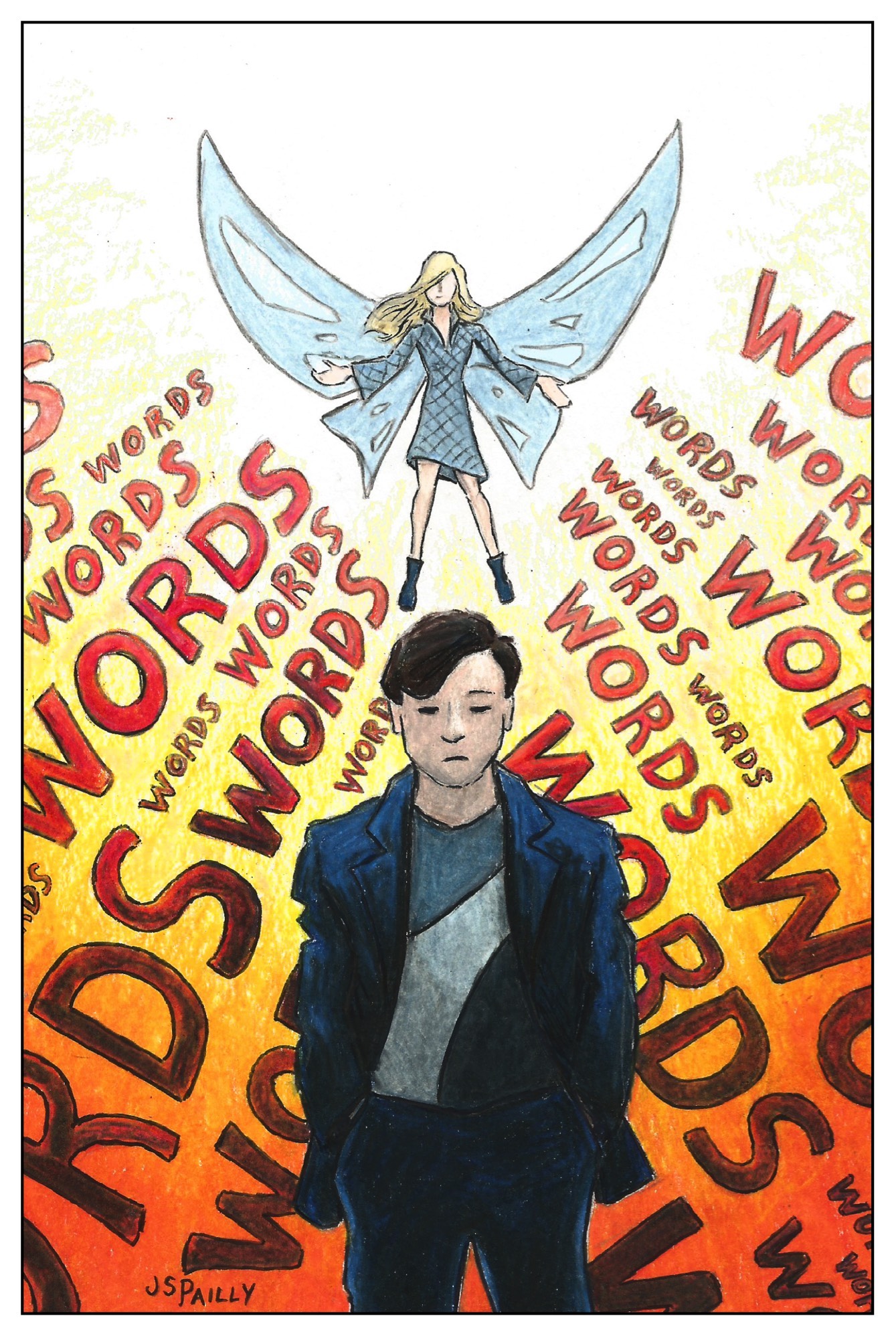
My writer loves writing, but he also hates it sometimes.  He doesn’t like to admit that, which is probably why he lets me talk about this on his behalf.  There are days when writing is fast and easy and fun, but there are also days when writing gets slow, tedious, and frustrating.

My writer just finished the A to Z Challenge.  Overall, he enjoyed the experience, but there were a few days when things got frustrating, especially toward the end of the challenge.  Frustrating enough that he wanted to give up, not just on the challenge itself but on blogging and writing in general.  Don’t worry, he’s okay now.  Every writer struggles sometimes with these “I want to give up” feelings.

Writing can’t always be fun.  It can’t always be easy.  Our job, as muses, is to be there for our writers both on the fun days and the days of frustration.  Those frustrating days are always a temporary problem, but if your writer can get through the frustrating parts, the joy and the pleasure of writing will return.

Mercury A to Z: Vulcan

Hello, friends!  Welcome to another posting of the A to Z Challenge.  For this year’s challenge, my theme is the planet Mercury, and in today’s post, logic dictates that V is for:

VULCAN

As you know, Mercury is the planet closest to the Sun, but at one time astronomers had reason to believe that there was another planet even closer to the Sun than Mercury.  This hypothetical planet was named Vulcan, after the ancient Roman god of fire—a highly logical choice.

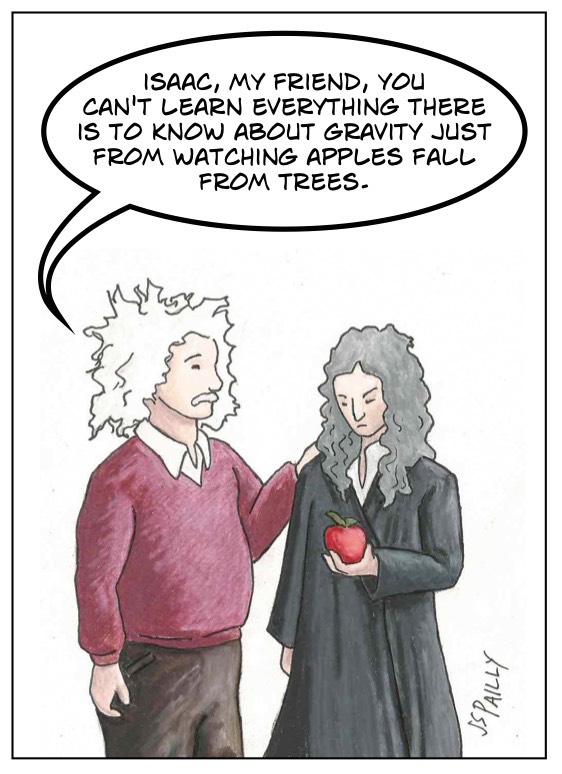
Our story begins with Isaac Newton and his law of universal gravitation.  Thanks to Newton, it became possible to predict the motions of the planets with extraordinary precision; however, in the centuries following Newton’s death, astronomers started having trouble using the logic of Newton’s law to predict when transits of Mercury would occur.

A transit of Mercury is when Mercury passes directly in front of the Sun, as observed from Earth.  This is one of the most exciting ways to see Mercury, provided you take the necessary precautions to protect your eyesight.  But in the 18th and 19th Centuries, Mercury started transiting the Sun at seemingly illogical times.  Mathematical predictions of Mercury transits were off by minutes, hours, or even by as much as a full day!

So French astronomer and mathematician Urbian Le Verrier hypothesized that another planet (named Vulcan) might exist, orbiting the Sun within the orbital path of Mercury.  Vulcan’s gravity might perturb the orbit of Mercury enough to explain why Mercury never seemed to transit the Sun on schedule.  Le Verrier had made a similar hypothesis, based on perturbations of the orbit of Uranus, which led to the discovery of the planet Neptune.  Thus, it seemed only logical to take Le Verrier’s Vulcan hypothesis seriously.

In the following years, a few astronomers claimed to have found Vulcan, proving Le Verrier’s hypothesis, but follow up observations could never confirm these discoveries.  Most sightings of Vulcan were probably just stars that happened to be near the Sun.  Most transits of Vulcan were probably just sunspots.  Perhaps, instead of a single planet, Vulcan might be a swarm of asteroids: the vulcanoid asteroids.  But it would require an absurd number of asteroids to account for the observed perturbations of Mercury’s orbit.  Logically speaking, an asteroid swarm that large would have already been noticed.

So Mercury kept transiting the Sun at the wrong times, according to Newton’s laws, and no one could explain why.  Not until 1915, with the publication of the theory of general relativity.  Thanks to the logic of German theoretical physicist Albert Einstein, we now know that the mass of the Sun curves the fabric of space-time.  This curvature affects the orbits of all the planets, but most especially the orbit of Mercury, because Mercury is so very close to the Sun.

WANT TO LEARN MORE?

Today I want to recommend this video from Astrum, one of my favorite YouTube channels.  If you love space as much as I do, it would be only logical to check out what Astrum has to offer.

Mercury A to Z: Solar vs. Sidereal Days

Hello, friends!  Welcome to another posting of the A to Z Challenge.  My theme for this year’s challenge is the planet Mercury, a planet that often gets overlooked by space geeks like me.  In today’s post, S is for:

SOLAR vs. SIDEREAL DAYS

We’ve been talking about Mercury all month long, and we’ve been talking a lot about Mercury’s rotation rate.  In some posts, I’ve told you that Mercury has a rotation rate equal to approximately 59 Earth days.  In other posts, I said a day on Mercury is about 176 Earth days long.  That seems like a contradiction, but both of those numbers are correct.  It all depends on whether we’re talking about a solar day or a sidereal day.

A solar day can be defined as the time it takes a planet to rotate once relative to the Sun, while a sidereal day is the time it takes a planet to rotate once on its own axis.  A solar day is what we Earthlings usually mean by the word “day.”  It’s the 12 a.m. on Monday to 12 a.m. on Tuesday kind of day.  A sidereal day (pronounced si-der-e-al) is more like a planet’s true rotation period, relative to the rest of the universe.  Why are these things different?  Because planets orbit the Sun.  Because as they orbit, they change position relative to the Sun.

In Earth’s case, it takes about 23 hours and 56 minutes to rotate once on its own axis, but because Earth moves through space during that time (changing positions relative to the Sun), it takes an extra 4 minutes to rotate once in reference to the Sun. And according to my math, 23 hours and 56 minutes, plus an extra 4 minutes, makes Earth’s solar day 24 hours long.

The situation is similar for Mars.  A Martian sidereal day is about 24 hours and 37 minutes, while a Martian solar day is more like 24 hours and 40 minutes.  For both Earth and Mars, the difference is small.  Most of the time, it’s not worth mentioning.  But on Mercury, a sidereal day is 59 Earth days long, while a solar day ends up being 176 Earth days in length.  You see, Mercury rotates very, very slowly.  Over the course of one sidereal day, Mercury travels two-thirds of the way around the Sun.  That puts Mercury in a very different position, relative to the Sun, at the end of a sidereal day.  As a result, Mercury’s solar day ends up being longer—a whole lot longer—than Mercury’s sidereal day.

I have to admit I had a hard time understanding the distinction between solar and sidereal days the first time I heard about it.  I hope that I have done a decent job explaining it to you.  But if anyone was wondering why I quoted different numbers in different posts for Mercury’s day/rotation period, this is the reason I did that.  For some topics, the sidereal day matters; for others, it’s the solar day that’s important.  And for the purposes of the A to Z Challenge, I wanted to save this discussion for S-day, so I just glossed over it until now.

WANT TO LEARN MORE?

I’m going to recommend an article from Universe Today called “How Long is a Day on Mercury?”

I also want to recommend another article from Universe Today called “How Long is a Day on Venus?” because if you think Mercury’s day is confusing, wait until you hear how messed up a day on Venus is.

#IWSG: Putting Facts on the Internet

Hello, friends!  Welcome to this month’s meeting of the Insecure Writer’s Support Group, a blog hop created by Alex J. Cavanaugh and co-hosted this month by Jemima Pett, Nancy Gideon, and Natalie Aguirre.  If you’re a writer and if you feel in any way insecure about your writing life, then this is the support group for you!  Click here to learn more!

I’m sorry, but I’m participating in the A to Z Challenge this month, and I just don’t have enough time to write an IWSG post, too.  Fortunately my muse has gotten used to writing these IWSG posts without me, so I’m going to turn the floor over to her.  My muse has something to say.  Perhaps it is something you and your muse would like to hear.

When my writer first started writing science fiction, he thought he wouldn’t have to do any research.  He thought he could just make stuff up.  As his muse, I quickly disabused him of that assumption.  No, science fiction need not be factual about everything all the time, but mixing a generous helping of facts into the fiction will add a sense of credibility to a Sci-Fi story, making it that much easier for readers to suspend their disbelief.

This blog exists because my writer thought that writing a blog about science would force him to do the research he needed to do to become a better science fiction writer.  And that worked.  My writer does his research now, and his Sci-Fi writing has improved as a result.  Now one of his favorite ploys, when writing Sci-Fi, is to try and make real science sound made up while making the stuff he made up sound like real science.

But that’s a game for science fiction writing only.  When my writer is writing this blog, he has developed a new anxiety, a new insecurity.  He is terrified that he might unwittingly spread misinformation about science on the Internet.  It is not unusual for my writer to get emails from science students—or even science teachers—asking him questions about the topics he blogs about.  It’s flattering, of course, but also a little bit scary, because he very much does not want to lead anyone astray in their science education.

This year’s A to Z Challenge is, as usual, a science heavy project.  So my writer tries to word things carefully, to ensure that he won’t mislead anyone.  He debates with himself which details must be included in a blog post and which can be safely glossed over or ignored.  He double checks his sources, and if he’s still not sure he’s got his science facts straight, he’ll either state that uncertainty explicitly, or he’ll cut that section entirely out of the post.  And despite all of that, he knows that he will still make mistakes.

All he can do is promise himself (and his readers) that he will correct his mistakes as soon as he finds out about them, because there is far too much misinformation about science on the Internet already.  My writer very much does not wish to make that problem worse.

I, For One, Welcome Our New A.I. Overlords

Hello, friends!

I was originally planning to post this last week, but then I got nervous.  I’m about to say something controversial.  I’m going to take a stance on an issue, fully aware of the fact that some of you will disagree with me—some of you may vigorously disagree.  That makes me a little bit nervous, but what makes me even more nervous is that I’m not 100% sure I agree with myself.  Even after taking an extra week to think things over, I still have doubts about what I’m about to say.  Okay, here goes: I am not super worried about A.I. generated art.

There’s a long history of people freaking out over new technologies.  I grew up in the 90’s.  I only vaguely remember the first time I heard about the Internet.  What I remember is that the Internet sounded scary.  No one seemed to fully understand what this Internet thing was or how it worked, but whenever adults started talking about it, they all had strong opinions.  Strongly negative opinions, it seemed.  Things were going to be different because of the Internet.  Things were going to change.  And if there’s one constant in life, it’s that change scares people.

And I’m not immune to that fear.  A few weeks ago, I saw a news article about a newly discovered exoplanet.  Photographing exoplanets is still, in most cases, beyond our current technology, so NASA sometimes publishes “artist conceptions” of what newly discovered exoplanets might look like.  Not this time, though.  This time, they used an A.I. generated image.  The image was beautiful.  I’m sure it was scientifically accurate, too.  And it left me feeling like I’d just been punched in the gut.  Drawing or painting what exoplanets might look like?  That’s a job, and it’s a job that will probably go away soon, because it’s a job an A.I. can easily do.

So I am worried about what A.I. means for creative folks like me.  However, I’ve also seen a little too much hyperbolic fear-mongering about A.I. generated art, writing, and music.  Despite what a lot of people are saying right now, I am not worried about A.I. replacing human artists entirely.  For the purposes of this blog post, I’d like to draw a distinction between creating art and producing content.  In theory, I could have an A.I. write blog posts for me, and I could have an A.I. generate silly cartoons for my blog, too.  Would you, dear reader, find those blog posts interesting and informative?  Would those A.I. generated cartoons make you smile?  Maybe.  But I suspect the novelty of that would only last so long.

I write and draw because I have things I want to say, and I don’t know any other way to say them.  Art exists to express feelings and ideas that would otherwise be inexpressible.  At its core, art is a form of communication.  An A.I. can produce content.  It may even produce informative or entertaining content.  But if I filled this blog with A.I. generated blog posts and A.I. generated cartoons, all the the thoughts and feelings I wanted to express would remain unexpressed, and the kind of human-to-human connection that art facilities would not occur.

So for that reason, I’m not super worried about A.I. generated art.  I am a little worried, because things are going to change, and certain niches in the art world (like artist conceptions of exoplanets) may disappear.  But this isn’t the end of art anymore than the Internet was the end of… whatever grownups in the 90’s thought the Internet would be the end of.  There will always be a need for and a desire for human-made art, because art is fundamentally a form of self expression.  It’s a form of communication.  A.I. can produce content, but it can never replace the human-to-human connection of genuinely human-made art.

WANT TO LEARN MORE?

My deepest concerns about A.I. art have little to do with the technology itself and more to do with the law.  Fortunately, the YouTube Channel Legal Eagle just did an episode about what the law has to say about A.I. generated art. Click here to watch!

And YouTuber Tom Scott recently did an episode about sigmoid curves and what they have to do artificial intelligence.  Click here for that.

#IWSG: The Patience of a Muse

Hello, friends!  Welcome to this month’s meeting of the Insecure Writer’s Support Group, a blog hop created by Alex J. Cavanaugh and cohosted this month by Jacqui Murray, Ronel Janse van Vuuren, Pat Garcia, and Gwen Gardner.  If you’re a writer and if you feel insecure about your writing life, then click here to learn more about this wonderfully supportive group!

I like to write, but I don’t like to talk about writing.  Whenever I talk about writing, I end up reminding myself just how tedious and frustrating the writing process can be.  Fortunately, my muse is always eager to talk about writing, even when I’m not in the mood, so today I’m going to turn the floor over to her.  My muse has something to say, and perhaps it’s something you and your muse would like to hear.

* * *

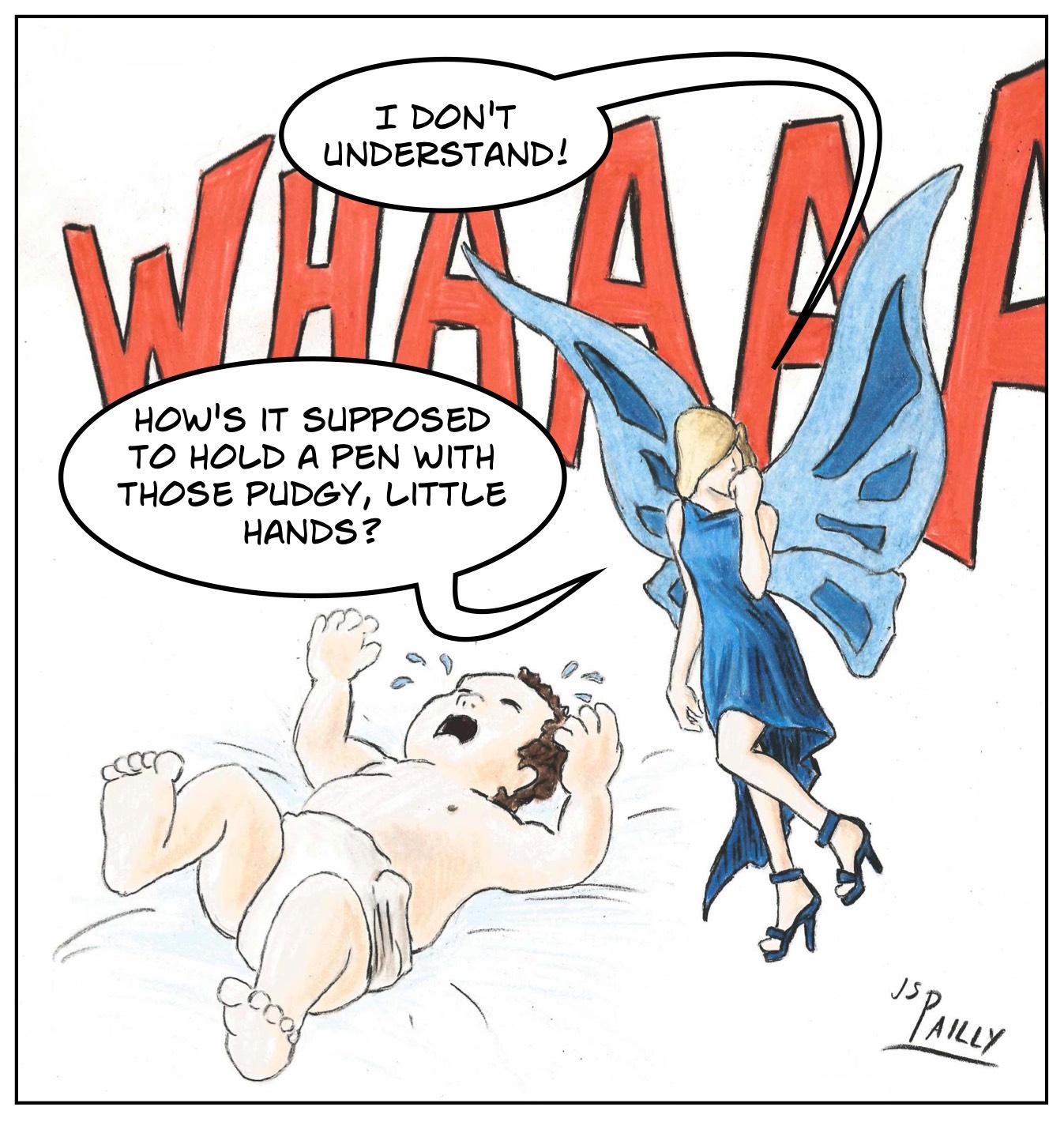
They don’t tell you this in muse school, but we muses need to play the long game with our writers.  Writers are born to write, but that does not mean they’re born with all the skills and abilities necessary for writing.  The day I first met my writer—the human I was assigned to guide and inspire throughout his creative life—I found him utterly unprepared and woefully ill-suited for writing.

We had to start with the basics.  I began by encouraging my writer to take an interest in the alphabet.  He had these wooden blocks with letters on them.  Those helped.  Then I got him interested in words.  Spelling was a challenge for many, many years, but we worked through that.  Then came grammar, syntax, rhymes and rhythm—allegory, metaphor, irony, parallelism—comedy and tragedy—classic literature and genre fiction…  We made progress.  My writer has learned much since I first met him; he also still has much to learn.

But writers are human, of course, and they can be stupid in the way all humans are stupid.  They like instant gratification.  They want quick, easy solutions to their problems, including their writing-related problems.  But writing is a skill that improves slowly.  Gradually.  The growth of a writer happens so slowly and so gradually that it may be almost imperceptible, even to writers themselves. Some writers may fool themselves into believing that they’re not improving at all, or they may start to fear that improvement is not possible.  They forget how far they’ve come, and they worry themselves sick over how much further they still has to go.

Needless to say, as a muse, you must never give up on your writer.  More importantly, though, never let your writer give up on him or herself.  Make your writer keep writing.  Make your writer keep practicing, keep trying.  Do that, and the writing will get better.  I promise.

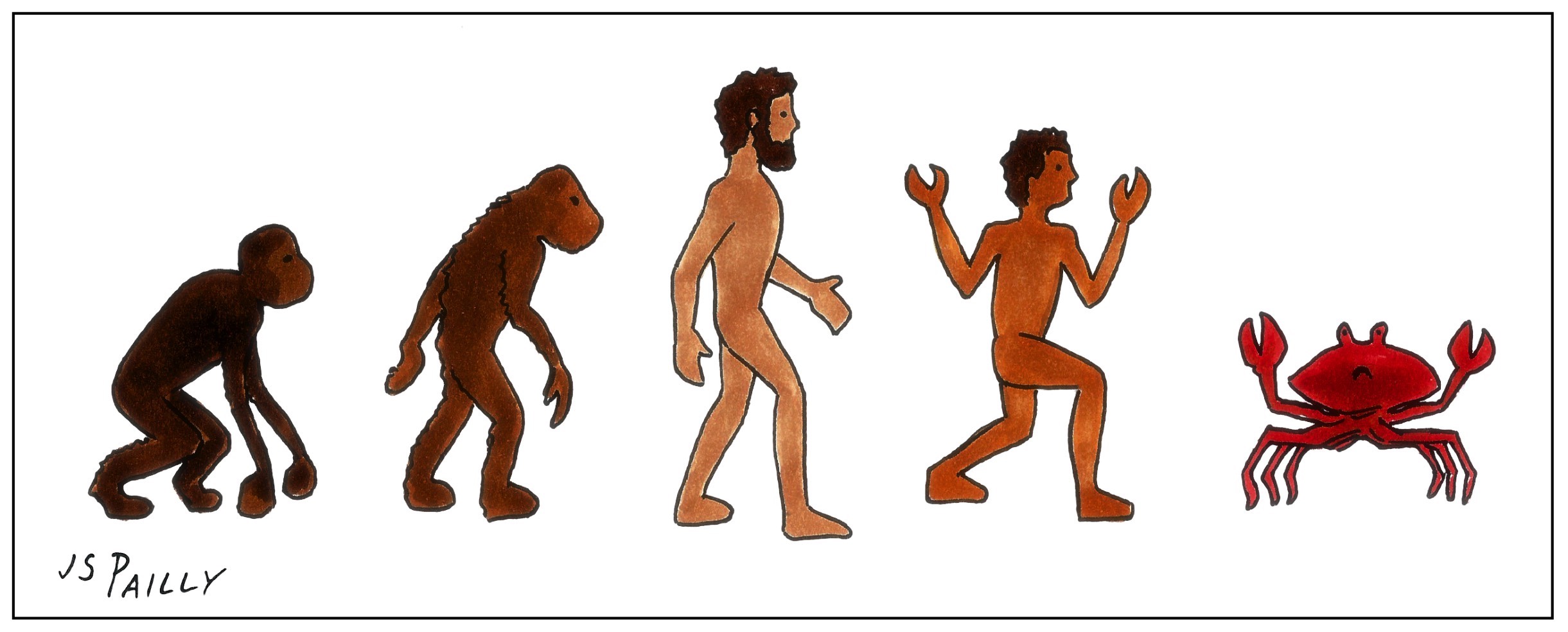
Does Evolution Want You to “Become Crab”?

Hello, friends!

So as far back as the mid-to-late 1800’s, scientists noticed that crab-like animals were oddly commonplace.  It seems that, for one reason or another, evolution favors crab-like body structures over other crustacean body types.  Well, maybe “favors” is the wrong word.  I wouldn’t want to imply that evolution plays favorites or that evolution has any sort of intended outcome.  That would be misleading.

When I read articles in the popular press about carcinization (the surprisingly common process of evolving a crab-like body), I feel like there’s a fundamental misunderstanding at work, not just about carcinization itself but about evolution in general.  Evolution doesn’t “prefer” this and it certainly doesn’t “intend” that.  There is no end-goal to the evolutionary process.

Evolution works by trial and error.  Organisms have problems, problems like “how do I find food?” or “how do I avoid becoming food?”  Some organisms manage to solve these sorts of problems; others do not.  The ones who solve their problems get to live, and they have the opportunity to pass their genes on to the next generation; the others?  They do not get to do that.

There are a surprising number of crab-like animals out there.  That must mean that being a crab helps you solve certain problems.  It does not mean that you’re evolution’s favorite, that evolution “wants” to create more crab-like creatures like you, or that being a crab is some sort of evolutionary end-goal.

All that being said, I have to admit it’s hard to avoid anthropomorphizing the concept of evolution just a little bit.  I mean, look at the stuff I do on this blog.  I anthropomorphize everything from atoms and molecules to planets and stars.  I imbue all sorts of things with wants and needs and strange personality quirks.  It’s only natural for me to say evolution “wants” this or “prefers” that, and I totally understand why so many other science writers fall into a similar trap.

So I guess what I’m saying is this: whenever you hear people talk about evolution’s “preferences” or “intentions,” bear in mind that those words are really just shorthand for something else.

Are Scientific Papers Worth Reading?

Hello, friends!

So over the course of the last few months, I’ve been learning about metascience.  I’ve been reading lots of metascientific articles and papers, and I’ve been watching a few metascientific lectures on YouTube.  For those of you who are unfamiliar with the concept, metascience is the scientific study of science itself, for the specific purpose of identifying fraud, correcting errors in the scientific process, and making science overall a more accurate and trustworthy thing.

Before I go any further with this topic, I think it’s extra important for you to understand who I am and what my perspective on science (and metascience) is.  I am not a scientist.  I have no professional or educational background in science.  What I am is a science fiction writer who wants to do his research so that science (as I portray it in my fiction) is accurate.  Well, somewhat accurate, or at least somewhat plausible.  At the very least, I want to make sure the science in my stories is not laughably implausible.

In order to do my research (as a science fiction writer), I have challenged myself to read peer-reviewed scientific papers.  I try to read at least one peer-reviewed paper each week.  As you can imagine, this is not easy.  These papers are packed full of jargon (some papers define their own jargon; most do not) and a whole lot of math (the kind of math where you see more of the Greek alphabet than Arabic numbers).

And now I learn, thanks to metascience, that the peer-review process is deeply flawed, and that science has way more problems than I ever realized.  There’s a lot of fraud going on, and also a lot of laziness and complacency, and scientists are not double checking each other’s work the way that they should.  That last problem—scientists not double checking each other’s work—is commonly known as the replication crisis.  It’s a problem which this article from Vox.com calls “an ongoing rot in the scientific process.”

No branch of science is immune to these problems, but I can take some solace in the fact that some branches of science seem to be more afflicted with problems than others.  Fields like medical science, computer science, and engineering (i.e.: the big money-maker sciences) are far more prone to fraud than fields like cosmology, astrophysics, or planetary science (i.e.: fields that I, as a science fiction writer, take the most interest in).  But still, as I said, no branch of science is immune.  Lazy and/or biased and/or unscrupulous researchers are everywhere.

And yet, despite some very valid concerns, I intend to keep reading these peer reviewed papers.  Why?  Because my alternative would be to get most of my science news and information from the popular press.  When it comes to science, the popular press has an annoying tendency to dumb things down, to gloss over boring (but important) details, and to hype up hypotheses that are the most likely to attract clicks and views but are the least likely to actually be true.  If I wrote my Sci-Fi based solely on what I read in the popular press, the science in my fiction would be laughably implausible.

I’d rather struggle through reading a peer-reviewed paper once a week.  Those papers may not be perfect, but reading them will get me much closer to the truth than relying on any other source of information currently available to me.

WANT TO LEARN MORE?

If you’d like to learn more about metascience and the replication crisis, I suggest checking out some of the links below.  These links are organized from “easiest and most accessible” at the top to “most technical” at the bottom.