Colonizing Ceres

Let’s talk about a certain dwarf planet. No, not Pluto. We’ll save that for Pluto month. Right now, we’re talking about Ceres.

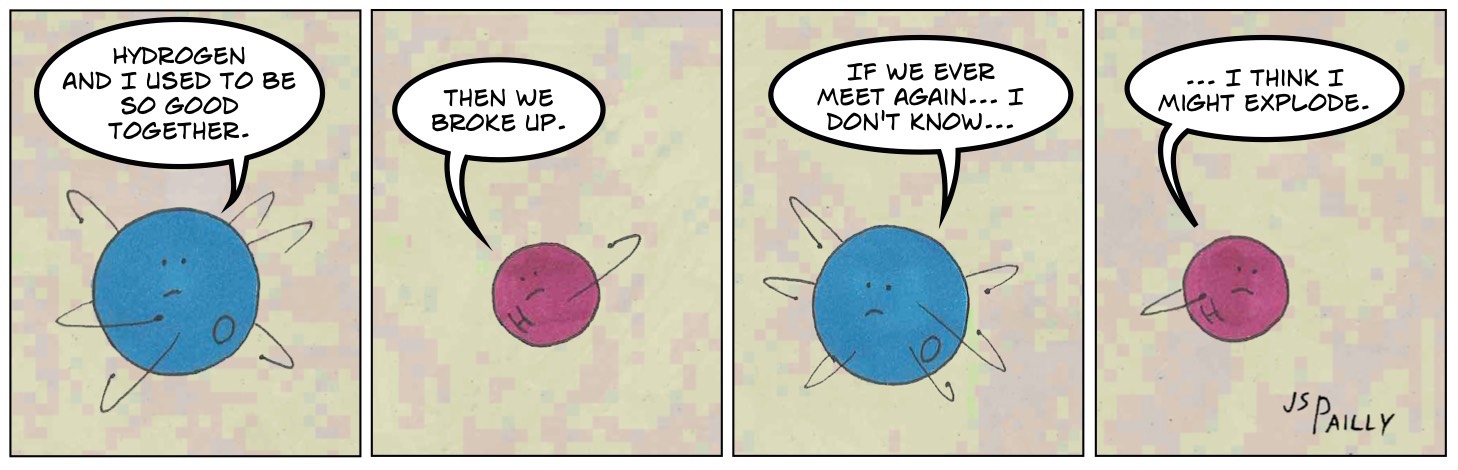
Jy10 Jealous Ceres
Totally legit Hubble image of Ceres with Pluto visible in the background.

Someday, perhaps someday soon, humanity will start spreading across the Solar System. When we do, the dwarf planet Ceres could become an important part of our interplanetary infrastructure.

Ceres has been in the news a lot lately (almost as much as Pluto). During a recent visit by the Dawn spacecraft, we discovered some surprising features:

  • A single, lonely mountain in the midst of an otherwise flat landscape.
  • An unidentified white substance (water ice?) in the basins of several craters.
  • Plumes of water vapor escaping into space, hinting at possible subsurface oceans.

Even if Ceres doesn’t have vast oceans of liquid water beneath its surface, evidence suggests it at least has plenty of water ice. Water in any form is an incredibly valuable resource for space travelers, and not only for the obvious reasons.

Water can be used for:

  • Drinking (obviously).
  • Washing (obviously).
  • Oxygen: through electrolysis, water can be separated into oxygen and hydrogen, providing a spaceship’s crew with breathable air.
  • Rocket fuel: hydrogen and oxygen, cryogenically stored in liquid forms, make excellent rocket fuel.
  • Radiation shielding: water is surprisingly good at blocking solar and cosmic radiation. Well positioned water tanks on a spaceship’s exterior could do a lot to protect the crew.

A colony (or at least an outpost) on Ceres could serve as a convenient refueling depot for spacecraft heading out beyond the asteroid belt or for valiant explorers returning to the inner Solar System. A watering hole in space, if you will.

At the very least, it could make a fun setting for a Sci-Fi story.
Molecular Monday: Turning Water Into Rocket Fuel

Welcome to Molecular Mondays! Every other Monday, we examine the atoms and molecules that serve as the building blocks of our universe, both in reality and in science fiction.

* * *

Humans need water. Our spaceships, however, may need it more than we do.

Human space exploration will never succeed if we have to carry everything we need from Earth. Instead, we have to learn to exploit the material resources space provides.

The Electrolysis of Water

Electrolysis is the process of using electricity to trigger a chemical reaction. Stick a pair of electrodes in water and turn on the power. This will break the chemical bonds holding water molecules (H2O) together.

Hydrogen will then accumulate around the negatively charged electrode. Oxygen will gather around the positive electrode.

Jy09 Hydrogen and Oxygen

Hydrogen, the Ultimate Rocket Fuel

Hydrogen makes the best rocket fuel (in more technical lingo, hydrogen has the highest specific impulse of any known substance). All you need is an oxidizer for the hydrogen to react with… and oh look, you’ve got plenty of oxygen! Just put the two back together in a reaction chamber, and you’re good to go.

Ideally, you’ll want to store your hydrogen and oxygen fuel in liquid form, which means you’ll need a lot of refrigeration equipment to keep them both below their boiling temperatures (roughly 20 Kelvin for hydrogen and 90 Kelvin for oxygen).

Asteroid Hopping

Of course, you’ll have some trouble finding water in space. If you’re planning an extended voyage through the Solar System, plot a course that will take you near some asteroids, specifically carbonaceous asteroids. They tend to contain relatively large amounts of water in the form of ice.

So long as you can find a few places to refuel your spacecraft, and so long as you bring the appropriate equipment along with you, you should be free to travel wherever you like.

* * *

Today’s post is part of asteroid belt month for the 2015 Mission to the Solar System. Click here for more about this series.

Sciency Words: M-Type Asteroids

Sciency Words MATH

Sciency Words is a special series here on Planet Pailly celebrating the rich and colorful world of science and science-related terminology. Today, we’re looking at the term:

M-TYPE ASTEROIDS

Previously on Sciency Words, we examined carbonaceous (C-type) and siliceous (S-type) asteroids, the most common and second most common asteroid types, respectively. We now come to the third most common type. Unfortunately, this is where nomenclature gets complicated.

Astronomers currently use at least two different systems to identify and categorize asteroids: the Tholen classification system and the SMASS classification system. The two systems overlap in some ways and diverge in others. What Tholen calls an M-type asteroid is, in SMASS, mixed into a broader category called the X-group.

I’d guess that eventually one of these classification systems will “win.” Either that or a new system will replace them both, simplifying matters. In the meantime, an M-type asteroid by any other name would smell as sweet.

Characteristics of M-Type Asteroids

The M in M-type stands for metallic. It’s unlikely that an asteroid of pure (or nearly pure) metal could form by itself. Therefore, M-type asteroids are assumed to be the metal cores of larger asteroids or maybe even dwarf planets that, for one reason or another, broke apart.

Most M-types seem to be composites of iron and nickel with traces of other metals—including precious metals like rare earths and platinum group metals. You can expect to find these valuable metals in much higher quantities than you would on Earth.

Jy07 Wealthy Asteroid
A typical M-type asteroid could be worth billions upon billions of dollars.

If someone were to capture one of these asteroids and safely bring it back to Earth, that someone would become extremely rich.

Or maybe not…

The Problems with Asteroid Mining

Before you hop into your personal spacecraft and fly out to the asteroid belt hunting for M-types, a few notes of caution:

  • There’s no way to know the exact composition of an M-type asteroid based solely on observations from Earth. There’s no guarantee that you’ll find substantial amounts of valuable metals.
  • M-type asteroids can have wildly different orbits from each other, making some much harder to reach than others. Fuel costs will stack up rapidly, seriously cutting into your profits.
  • M-types are basically solid lumps of metal. You’ll need more than a pickaxe or jackhammer to crack them open. The difficulties associated with mining operations will also seriously cut into your profits.

And yet it’s hard to resist the lure of M-type asteroids. Businesses in existence today (not some far-off Sci-Fi tomorrow) are greedily eyeing M-types, trying to figure out how to go get one. That may soon become a driving force in human space exploration. Or the hunt for M-type asteroids could turn into a huge economic bust.

Just something science fiction writers might want to think about.

Book Recommendation

Asteroid Mining 101: Wealth for the New Space Economy by John S. Lewis. There are plenty of books and articles out there about asteroid mining, but this one takes a serious look at both the pros and cons of the idea. If this is a subject that interests you, Asteroid Mining 101 offers a well-balanced view of the future of the asteroid mining industry.

* * *

Today’s post is part of asteroid belt month for the 2015 Mission to the Solar System. Click here for more about this series.

Kicked Out of the Planet Club: The Story of Ceres

In 2006, the I.A.U. officially demoted Pluto from planet to dwarf planet. At this point, pretty much everyone knows that, and most people seem to have strong opinions on the matter (especially right now, as New Horizons sends back the first ever detailed images of Pluto). However, Pluto was not the first planet to be demoted. That particular dishonor goes to Ceres.

Discovered on New Year’s Day, 1801, Ceres was initially identified as the long sought missing planet between the orbits of Jupiter and Mars, making it the second planet discovered in modern times (Uranus was discovered about twenty years prior).

A few months later, however, astronomers discovered another object (named Pallas) sharing Ceres’s orbit. Within a few years, they found another (Juno) and another (Vesta). This started getting awkward. How could we have so many planets in the same (or nearly the same) orbit?

Jy06 Demoting Ceres 1

And so Ceres went from being the fifth planet to the first known asteroid.

Jy06 Demoting Ceres 2

What happened to Pluto is almost the exact same story. When Pluto was discovered, we had no way to know that it was one of a great many trans-Neptunian objects. Once we realized our mistake, Pluto had to be reclassified.

On the upside, the creation of a new category of celestial object allowed us to promote Ceres from asteroid to dwarf planet. So Pluto’s loss was Ceres’s gain.

But what do you think? Do you agree with the I.A.U.’s decision, or do you think Pluto and Ceres should have retained their planethood?

* * *

Today’s post is part of asteroid belt month for the 2015 Mission to the Solar System. Click here for more about this series.

Sciency Words: Siliceous Asteroids

Sciency Words MATH

Sciency Words is a special series here on Planet Pailly celebrating the rich and colorful world of science and science-related terminology. Today, we’re looking at the term:

SILICEOUS ASTEROIDS

It’s a tale of two asteroids, one in the inner asteroid belt, the other in the outer region.

Jy05 Two Asteroids Part 1

Both asteroids started off much the same but wound up quite different. The inner belt asteroid, being closer to the Sun, got blasted by the solar wind, losing many of its lighter materials: water, organic compounds, other volatiles…

Jy05 Two Asteroids Part 2

The outer belt asteroid, being farther away from the Sun, still feels the solar wind’s effects, but less so.

And so one asteroid becomes a carbonaceous asteroid, retaining many of the lightweight materials that are so appealing to life and perhaps some day asteroid mining corporations. The other became a siliceous asteroid.

Jy05 Two Asteroids Part 3

Siliceous asteroids, also known as S-type asteroids or sometimes stony asteroids, are basically great big rocks. They’re composed of a mixture of silicon with additional metals and/or minerals. Astronomers estimate 15-20% of asteroids in the Solar System are siliceous, and most reside (not surprisingly) in the inner asteroid belt.

If you’ve seen Star Wars: The Empire Strikes Back, you should have some idea what siliceous asteroids look like. They’re a lighter color than their carbonaceous cousins, making them a bit easier to spot against the dark backdrop of space. They also tend to be reddish brown or sometimes greenish brown, depending on which combinations of metals and minerals they contain.

However, since they’re depleted of water, carbon, and such, it’s unlikely siliceous asteroids could host large populations of mynocks, as seen in Star Wars. They’re also not the most exciting prospects for future asteroid mining operations. Not when there are far more valuable M-type asteroids out there, which will be the subject of next week’s edition of Sciency Words.

Links

Asteroid Mining from Astronomy Source.

Asteroid Mining 101: Wealth for the New Space Economy by John Lewis.

* * *

Today’s post is part of asteroid belt month for the 2015 Mission to the Solar System. Click here for more about this series.

Molecular Monday: Platinum Group Metals

Welcome to Molecular Mondays! Every other Monday, we examine the atoms and molecules that serve as the building blocks of our universe, both in reality and in science fiction. Today, we turn our attention to:

THE PLATINUM GROUP METALS

Not all atoms are created equal. Some have super powers.

Jy03 Awesome AtomsPictured above are the platinum group metals: ruthenium, rhodium, palladium, osmium, iridium, and of course platinum. All six can be found clustered together on the periodic table of the elements.

Jy03 Awesome Periodic Table

Why are the platinum group metals (or P.G.M.s) so special? Here are some of the reasons:

  • P.G.M.s have excellent catalytic properties, making them an important component in catalytic converters.
  • P.G.M.s also have excellent electrical properties, which we take advantage of in nearly all modern electronics.
  • Most of the P.G.M.s are highly resistant to oxidation, even at high temperatures, making them useful for all sorts of industrial applications.
  • P.G.M.s and P.G.M. alloys make great jewelry because they don’t tarnish easily.

Inconveniently, most of the platinum group metals on Earth sank into the planet’s core while the planet was still forming. The small quantities we have access to, which were for the most part seeded by meteor impacts after Earth’s crust had solidified, can be hard to find and difficult to extract.

How difficult? So difficult that some business people say it would be easier to go into space and try to mine this stuff from asteroids.

No seriously, there are actual businesses that want to do that. Some are already taking the first preliminary steps to figure out how. It’s one of the reasons the American space program became suddenly interested in asteroid capture missions a few years back.

On today’s market, one troy ounce of a platinum group metal (take your pick; this is true for all of them) can cost hundreds or even thousands of dollars. Our increasingly high-tech society depends upon this stuff, and sooner or later we will run out of places to find it here on Earth.

Maybe… just maybe… the search for platinum group metals will be enough to motivate investing serious money in space exploration. Just something futurists and Sci-Fi writers may want to think about.

Links

Asteroid Mining from Astronomy Source.

Properties of Platinum Group Metals from Johnson Matthey: Precious Metals Management.

The Evolution of NASA’s Ambitious Asteroid-Capture Mission from Space.com.

* * *

Today’s post is part of asteroid belt month for the 2015 Mission to the Solar System. Click here for more about this series.

Sciency Words: Carbonaceous Asteroids

Sciency Words PHYS copy

Sciency Words is a special series here on Planet Pailly celebrating the rich and colorful world of science and science-related terminology. Today, we’re looking at the term:

CARBONACEOUS ASTEROIDS

As the name implies, carbonaceous asteroids (or C-type asteroids) have lots of carbon and carbon-containing compounds. Around 75% of the asteroids in the Solar System are believed to be carbonaceous, with most located in the outer asteroid belt. They’re dark in color, sort of like giant lumps of coal, which makes them difficult to find against the inky blackness of space.

But perhaps the most interesting thing about carbonaceous asteroids is that they can support life.

Jy02 Skeptical Asteroids

Bear with me a moment. Some scientists think life in our Solar System may not have originated on Earth or Mars or any planet. Instead, life may have begun on carbonaceous asteroids.

These asteroids contain many of the carbon-based molecules (including amino acids) necessary for life. They also generally have water ice, and at least when the Solar System was young, they would have retained plenty of heat.

And yet, the idea of life evolving and thriving on an asteroid is a bit of a stretch. Carbonaceous chondrite meteorites (fragments of carbonaceous asteroids that fell to Earth) show no signs of past or present biological activity. As a point of comparison, some meteorites originating from Mars offer at least circumstantial evidence of Martian life.

However, carbonaceous asteroids could become useful to life in the future. Space faring civilizations may want to harvest these asteroids for their resources, especially water, which could be used either for drinking or, if separated into hydrogen and oxygen, as rocket fuel. One large carbonaceous asteroid could keep a spaceship and its crew going for a long, long time.

At the very least, carbonaceous asteroids could provide valuable fuel for the imagination of a science fiction writer. What might happen if, while mining carbonaceous asteroids for their resources, we discovered that they do support life after all?

Links

Asteroid Mining from Astronomy Source.

Abodes for Life in Carbonaceous Asteroids? from Icarus.

Why Haven’t We Found Evidence for Life Starting in Asteroids? from the Planetary Society.

* * *

Today’s post is part of asteroid belt month for the 2015 Mission to the Solar System. Click here for more about this series.


Meet Mars’s Moons

Jn13 Mars's MoonsThis month, as part of the 2015 Mission to the Solar System, we’ve been visiting the planet Mars. How could we not spend at least one post talking about Mars’s two moons, Phobos and Deimos?

Someday, humanity will colonize Mars. When we do, these two moons should provide some interesting stargazing opportunities.

Phobos, as observed from the surface of Mars, may not be quite as large as Earth’s Moon as observed from the surface of Earth, but it’s still a large, easy to spot object. Now imagine watching this large object racing through the sky, rising and setting two or sometimes three times per day (I mean per sol). That’s what Martian colonists will get to see.

Meanwhile, Deimos only rises and sets once per day. That seems a bit more normal, expect for Martian stargazers, Phobos and Deimos will seem to be moving in opposite directions. This is because Deimos lags slightly behind Mars’s rotation, making it appear to be moving backwards compared to Phobos.

Deimos is also slowly drifting away from Mars.

Jn13 Deimos Sneaks Off

Eventually, Deimos will break free of Mars’s gravity and escape into a new orbit around the Sun.

Phobos, on the other hand, is getting gradually closer to Mars. At some point, tens of millions of years from now, it’s expected to crash into the planet’s surface.

Jn13 Phobos Falling

Lastly, both Phobos and Deimos look suspiciously like asteroids. On that note, our month-long tour of Mars comes to an end. The 2015 Mission to the Solar System will continue in July as we enter the asteroid belt (a region that went into an uproar after two of its asteroids mysteriously went missing).

P.S.: There’s another possible fate for Phobos: rather than crashing to the surface of Mars, it might be shredded by tidal forces. If so, the fragments could end up forming a faint planetary ring around Mars, which would be pretty cool.

Sciency Words: Entomophagy

Sciency Words BIO copy

Sciency Words is a special series here on Planet Pailly celebrating the rich and colorful world of science and science-related terminology. Today, we’re looking at the term:

ENTOMOPHAGY

If you want to live on Mars, you may have to get used to this term. It combines the Greek words for insect and eating. Yes, my friends, we’re talking about eating bugs.

Why Can’t We Eat Beef on Mars?

Keeping humans well fed will be one of the biggest challenges for Mars colonization (or frankly any long-term settlement off Earth). First off, you won’t have access to beef. Cattle require way too much grazing land.

The initial colony on Mars will likely only have a few small greenhouses to provide all their food. There simply won’t be room to spare for cows, pigs, or chickens. That also precludes having things like milk, cheese, and eggs.

It may be possible to raise fish on Mars. Loach and tilapia are sometimes included on the Mars diet menu. As a seafood fan, I’m all for that, but finding enough water for the required fish tanks could prove problematic.

Do We Really Need to Eat Insects?

Compared to more traditional barnyard animals, insects look like a much better option for feeding hungry colonists. Many insect species have already visited the International Space Station, so we know they’re okay with low or no gravity environments.

Insects don’t require much room. They can live in our tiny greenhouses and even help decompose plant waste like dead leaves, stems, and other inedible vegetable matter. In fact, we may have to bring insects with us anyway to help keep our plants healthy.

Best of all, insects convert almost everything they eat into insect protein. Very little nutrition is lost as it moves along the food chain.

So who else is ready to go to Mars and eat a handful of crickets?

Couldn’t We Just Be Vegans?

Plenty of people here on Earth survive without any animal protein whatsoever. No beef, chicken, dairy, tilapia, or even crickets. Some of these people assure me that they feel healthier on a vegan diet, and I have no reason to doubt them.

Maybe veganism would work on Mars, but the idea raises some concerns. With only a small number of greenhouses, the first colonies on Mars might not be able to supply a sufficiently diverse range of vegetables. Mission planners have therefore struggled to prepare a menu that doesn’t include at least some form of animal protein.

So entomophagy is something that both mission planners and science fiction writers alike might want to think about when designing future colonies on Mars or elsewhere.

Links

Entomophagy as Part of a Space Diet for Habitation on Mars from the Japanese Rocket Society.

Space Diet: Daily Mealworm (Tenebrio molitor) Harvest on a Multigenerational Spaceship from the Journal of Interdisciplinary Science Topics.

Predicting Mars Cuisine: Grasshoppers with a Side of Fungi from Space.com.

* * *

Today’s post is part of Mars month for the 2015 Mission to the Solar System. Click here for more about this series.


Martian Sandstorms: Just How Worried Should You Be?

Before you plan your next trip to Mars, be sure to check the weather forecast. Martian sandstorms can be rather extreme, in some cases spreading over the whole planet, reducing visibility to almost zero.

Totally legit Hubble images of Mars before and during a global sandstorm.

However, the dangers associated with these sandstorms are sometimes exaggerated.

Attempting to land during a Martian dust storm can be hazardous. In 1971, a global storm happened to occur just as a pair of Soviet landers arrived. Let’s just say things didn’t go well.

But if you’re already on the surface of Mars when a dust storm begins, as quite a number of NASA landers and rovers have been, you really don’t have much to worry about. Yes, there are 60 mile per hour winds, but atmospheric pressure on Mars is less than 1% that on Earth. So while these storms have wind speeds comparable to Earth hurricanes, they are nowhere near hurricane force.

Dust storm season takes place during summer in the planet’s southern hemisphere. Martian southern summer happens to coincide with Mars’s closest approach to the Sun, making it warmer than northern summer. This extra heat releases extra volatiles (mostly CO2 gas) from the south polar ice cap. This agitates the atmosphere, which in turn whips up some spectacular sandstorms.

So if you’re planning a vacation on Mars, try to avoid landing during southern summer. Since you can only schedule your trip for times when Earth and Mars line up properly, this greatly reduces the number of possible launch windows. But trust me: crash landing on Mars during a sandstorm could really spoil your trip.

Links

What are the Risks of Dust and Sand on Mars? from Mars One.

Spacecraft Monitoring Martian Dust Storm from NASA.

* * *

Today’s post is part of Mars month for the 2015 Mission to the Solar System. Click here to learn more about this series.